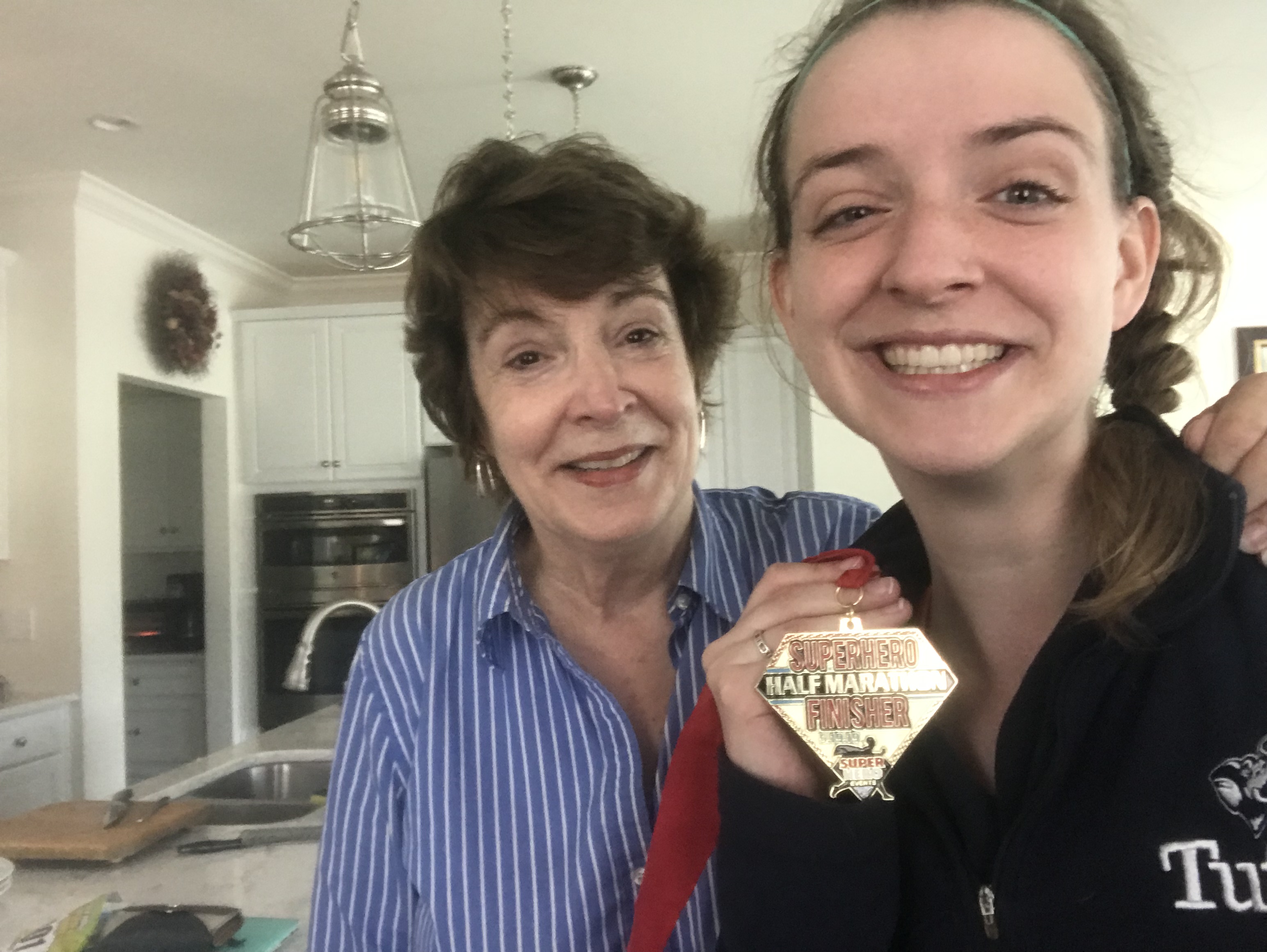
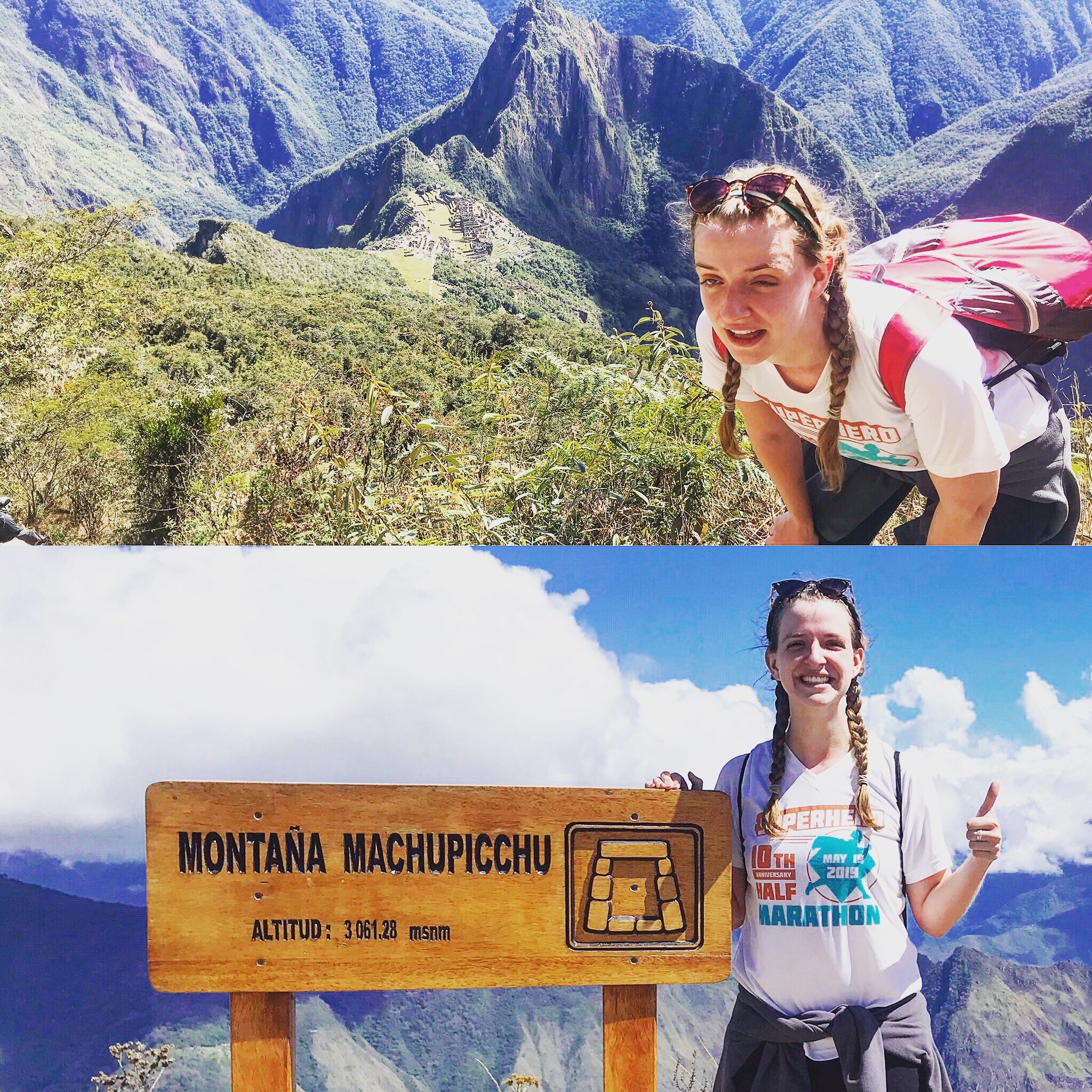
Travel Blog Final Dispatch (#14): Thank You Forever

Hi everyone,

It’s been just over a month since I returned home. And in that month, boy, a lot has changed. The current situation has given me ample time to revel in travel nostalgia and pine for days when things were, well, normal. But it’s also allowed me to reflect on my trip and all that I’m grateful for. So: as I’m processing all of this, I wanted to send out one final sign-off from suburban New Jersey to say thanks.

FYI: I did write one last update about New Zealand, as well. If you’re interested in reading about that part of my trip, you can do that here.

Privilege

First and foremost, travel is a privilege. There are millions of people in the world who will never get to even scratch the surface of what I did. During my last few weeks in New Zealand, I stayed at a place called Kohutapu Lodge on Lake Aniwhenua. The lodge was run by a Maori family—New Zealand’s indigenous people—and their goal was to not only to immerse us in their culture and customs, but also to effect positive change through tourism. As such, they donate a significant portion of their earnings back to the community. And each day that local schools are in session, they pack lunches for kids who don’t have one—and allow tourists to distribute them while talking with the children about their own home countries. As she explained this mission to us, the manager of Kohutapu said something that stuck with me:

“You see, whanau (whanau means “family” in Maori and is pronounced “Fah-no” in English)—a lot of these kids won’t ever get the chance to travel like you all are doing right now. A lot of them won’t even be able to leave this town. So we like having you come in, so we can bring a little bit of the world to them.” 

I’m so fortunate to have even had this experience at all. I’m thankful for the jobs I had before this trip that ultimately provided me with the funds to make it possible. I’m thankful for my family, who offered me a rent-free safety net when I returned. I’m thankful to live in a country where travel is encouraged, where I can make money, and save money—and where the dollar goes far.
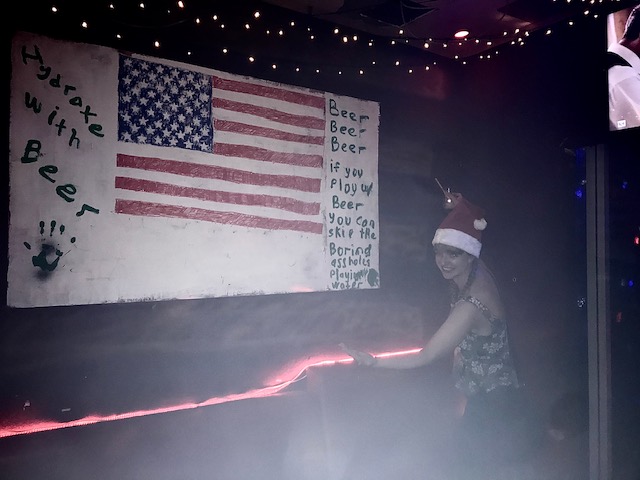
I don’t always feel particularly patriotic as an American, especially these days—but I always feel pretty fortunate.

Choice

So yes, travel is one of the greatest privileges a person could have. That being said, it’s also a choice. One that was really challenging for me to make … and sometimes just as difficult to justify when I was on the road. This journey was a true highlight—and probably the best decision—of my life, but I hit some lows along the way, too. There were moments when I was anxious. Lonely. Overwhelmed. Exhausted. Discouraged. Scared. And it was harder to endure those times knowing I had consciously, deliberately, and intentionally put myself in that position.

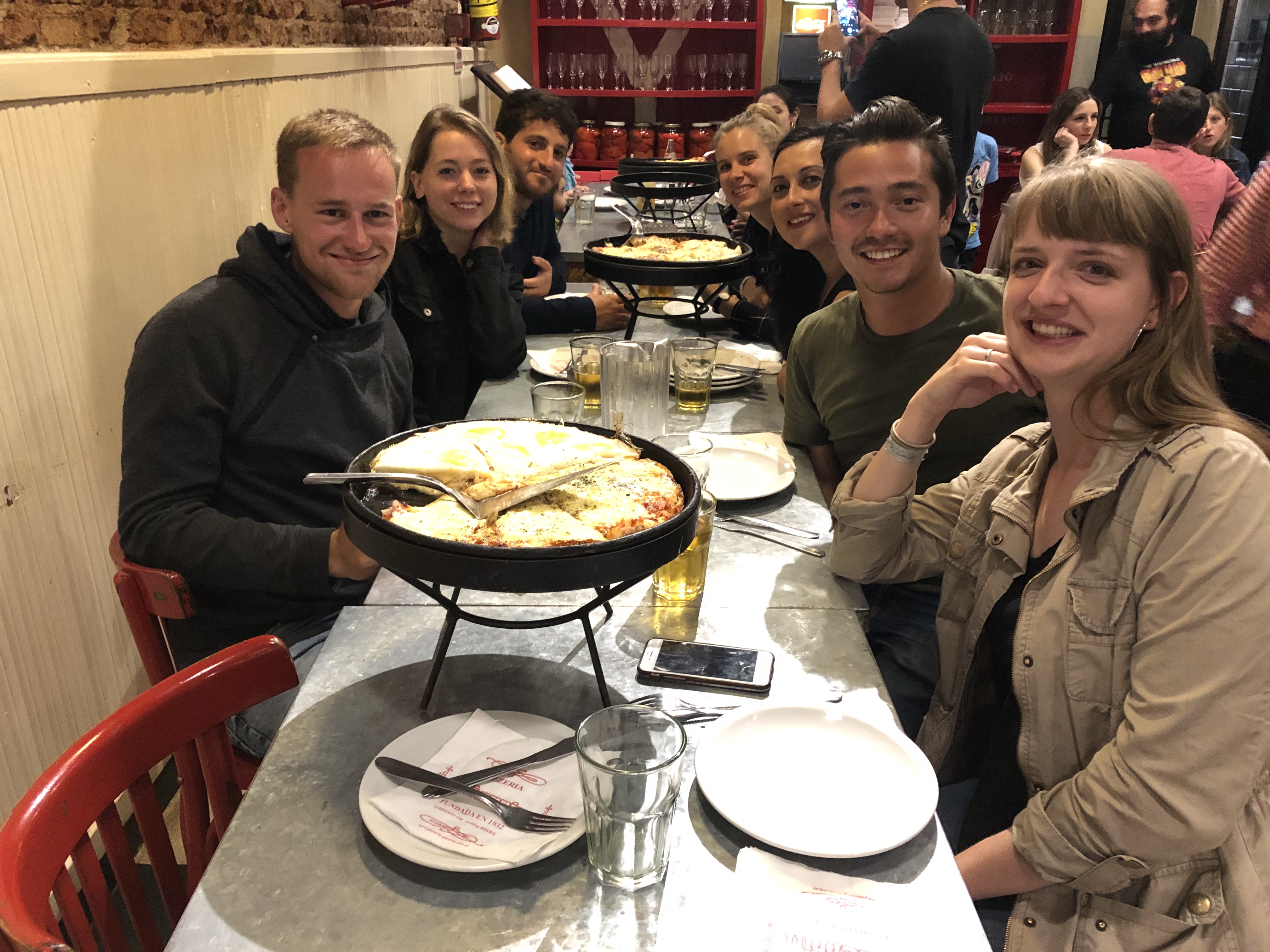
Luckily, I had—and have—an amazing support system. I have parents who loved me enough to worry about my every move, every waking minute, but still stand by my decision to leave. I have friends who followed along, checked in, and showed up when I needed them most. And I have a cousin and mentor who inspired and encouraged me from day one. (Shout out to Patrick Chapin, whose personal appetite for travel and 2003 round-the-world trip was a catalyst for my own—and whose relentlessly upbeat attitude helped me bring the same to my time abroad). So, to everyone who said that they were proud of me … thank you from the bottom of my heart. That approval allowed me to keep on keepin’ on. You’re the real MVPs.
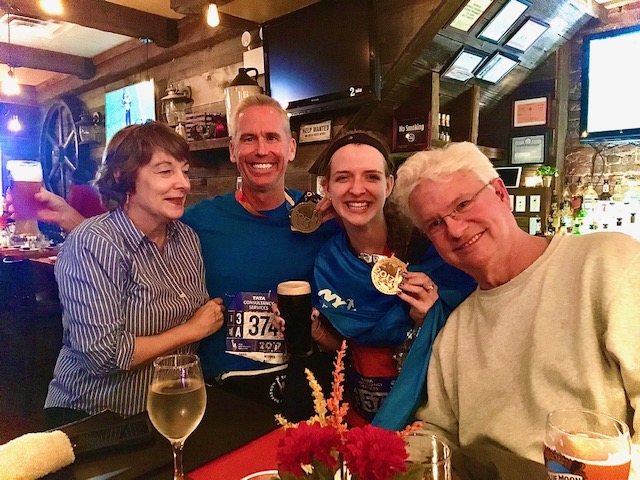
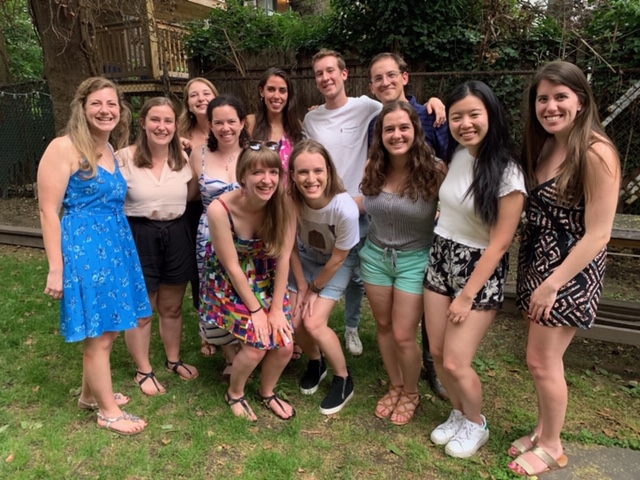
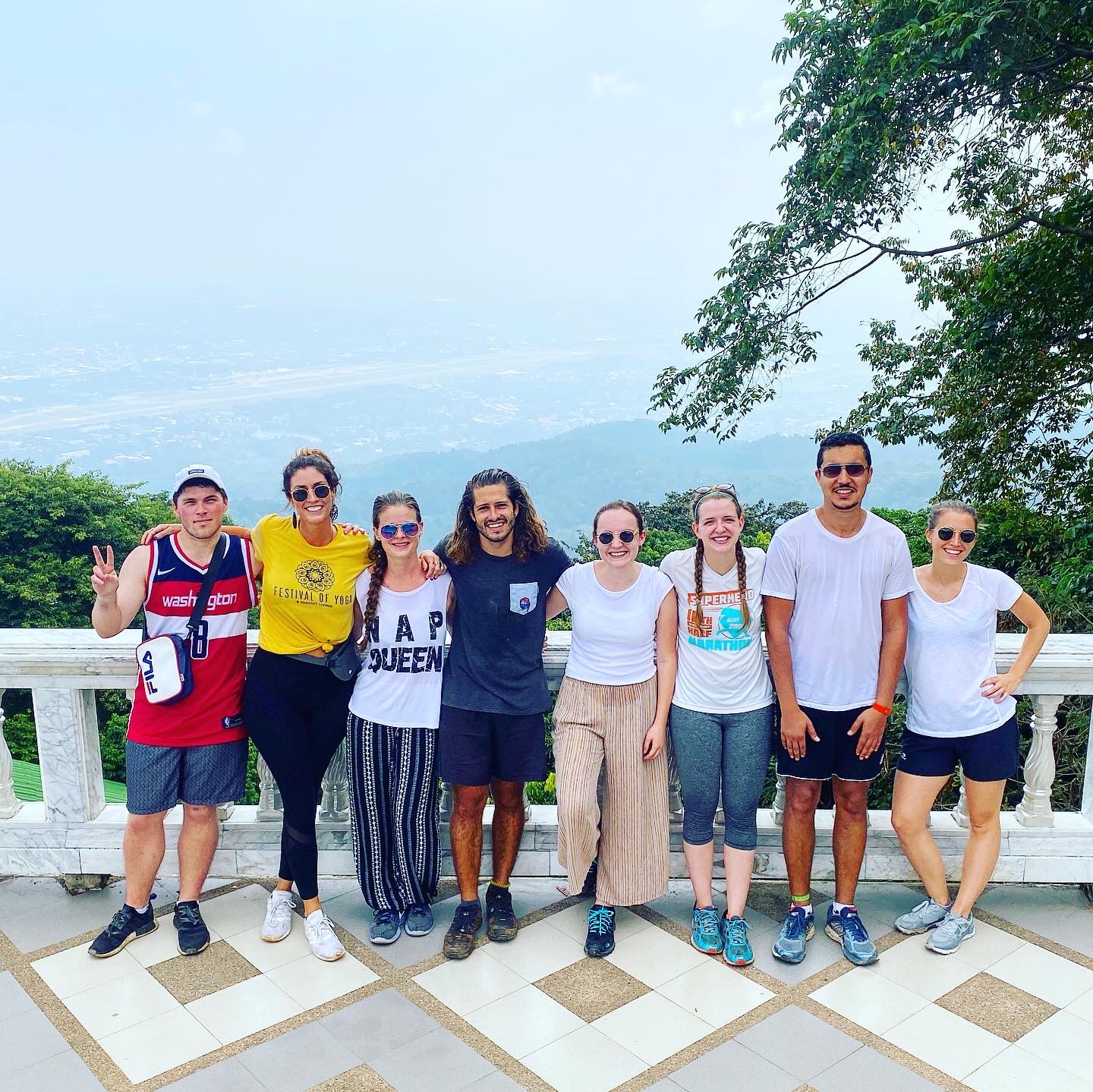
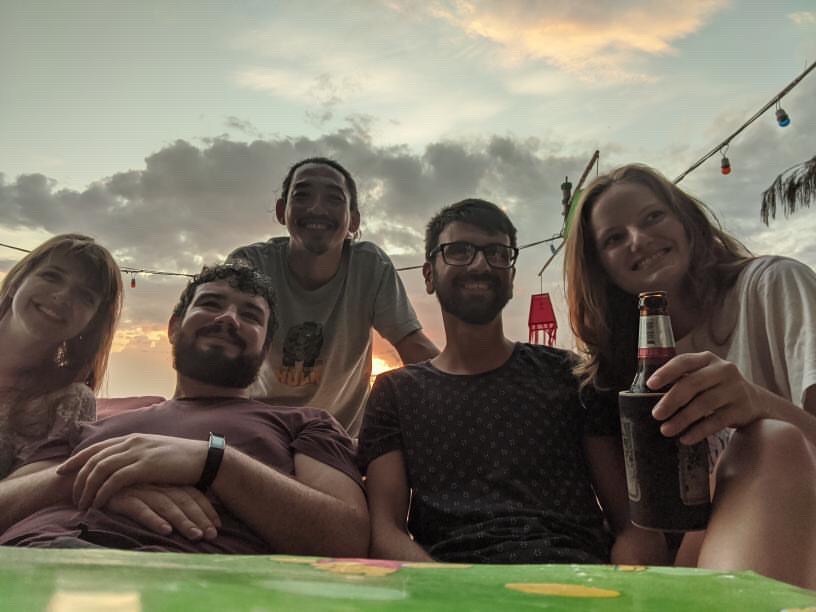
Just some of the many people in my corner.

Lessons learned 

In the past few weeks, I’ve felt like I’ve been in an intense game of tug of war with my own emotions. In the midst of this coronavirus craziness, everyone’s lives changed overnight. But for me, it seems even more extreme. In a little over a month, I went from making new friends on the daily and staying in hostels teeming with people to living in complete social isolation. From moving around freely every couple of days to incessantly wondering when the next time I’ll be able to scratch that travel itch will be. From being utterly relieved about the literal perfect timing of my trip (so many of the buddies I met abroad had to come home early as countries closed borders and banned flights) to feeling completely disheartened that this crisis hit right as I’m trying to reenter the job market (seriously, if any of you know what I can write instead of this blog, let a girl know!). But I take solace in the fact that, right now, I’m not the only one on this up and down seesaw that is reality.

If my travels taught me anything, it’s that life is a balancing act. In the seven and half months I was away, this lesson came to light in everything that I saw and did. It was evident in the small, day-to-day decisions I made: Should I travel quickly and cover lots of ground or slowly and enjoy myself more? How much time should I spend in the cities versus the country? When do I want to hang out with people and when should I tap out to take some time for myself? But it was also evident in the big-picture takeaways, too: Would challenging myself socially make up for not pushing myself intellectually? Which was better: the simple, stop-and-smell-the-roses mentality in so many of the places I visited or the Western rise-and-grind mindset I was used to back home? 

The answers were always firmly planted in the middle—in the gray area, in the in-between. And this, I think, is something that also applies to the circumstances we find ourselves in now. Optimism and frustration aren’t mutually exclusive. In fact, they’re two sides of the same coin and often coexist. You can see all the silver linings of a situation, but still feel down and out some days. Ups and downs are human nature—and that’s alright. But … if you can strike a balance that favors positivity at least 51 percent of the time, that’s a good first step. 😀
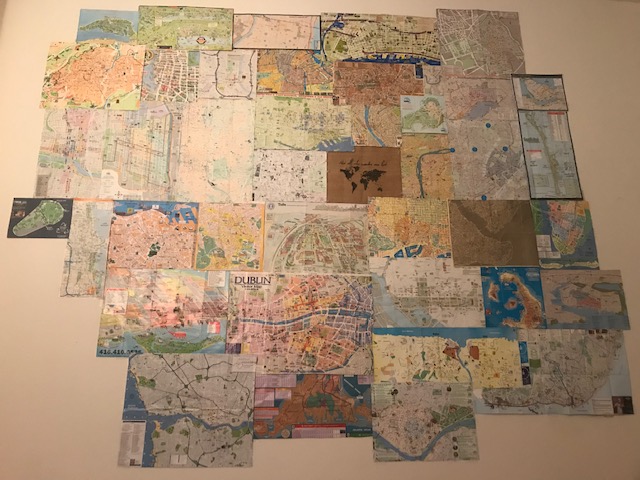
At least while we’re quarantined I can go through my map collection—I’ve got a few more to add 🙂 

Ya’ll. One final thank you. THANK ALL OF YOU SO MUCH for reading these damn updates. I probably would have tried to write them anyway … but it was a lot easier knowing I had an audience.

Stay safe. Stay sane. And let’s Skype (or FaceTime or Zoom or whatever)?

Much love,
Caroline
South Pacific Update #1 (#13): Signage Like You’ve Never Seen Before
Tired of travel

As much as I loved Southeast Asia, it also pushed me to my limits. I was there during months five and six of my travels. At this point, the JANK was becoming too real. The holes in my shoes were growing bigger and more plentiful. The clothes in my backpack needed to be burned (incinerated is actually a better term). The hostels were wearing me down.

I was starting to miss Western conveniences, too. I wanted to sit on a toilet, not pee in a hole in the ground. I wanted toilet paper, too. The English language! Tap water I could drink! Food that had been sanitized! (Although, God bless—I never got food poisoning from any street meat. Turns out my stomach is actually my superpower.)

Individually, these tiny vexations were just that: nuisances and nothing more. But cumulatively, they forced me to begin thinking about a return date. After all, I initially had said I’d be away four to six months. That window had come and, now, was almost gone … and I still didn’t know what was next. 
After a few days of planning (an activity I came to truly loathe), I finally had an answer. I would spend most of December in Vietnam. Then, right after Christmas, I would fly to New Zealand for over a month before heading back to California at the end of January. New Zealand, I reasoned, would be Western enough … enabling me to continue traveling without burning out, and easing me back into the customs and culture of home before I actually arrived.

Structure and signage and safety, oh my!

And New Zealand did all of that and more. During this leg of my trip, I decided to travel with a company called Stray. To see everything New Zealand has to offer, you really need a car—but I couldn’t afford to rent one alone, and didn’t want to do so with complete strangers. I worried that public buses would only take me to bigger cities, limiting my options. Stray was a hop-on, hop-off bus that felt more like a tour. And while I usually don’t prefer that type of travel, the Stray route went to some pretty cool spots—and enabled me to meet people very easily. It was structured and straightforward and simple. And, most importantly, it meant I didn’t have to use my brain to plan every step of the way. BOOM, done.

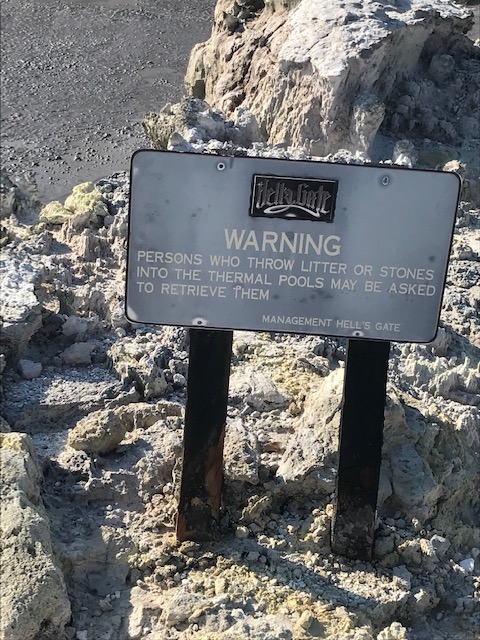
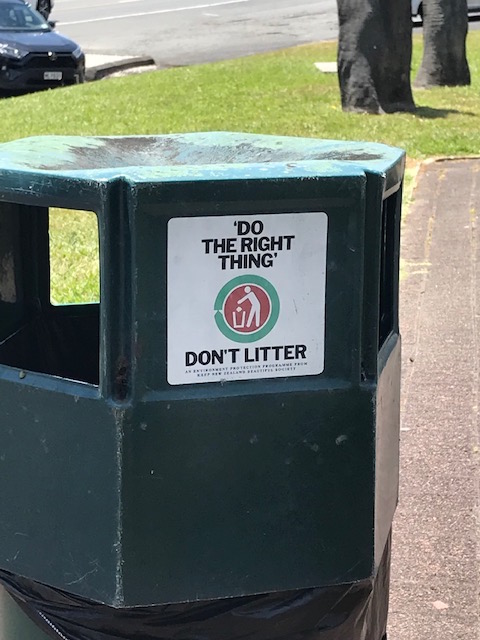
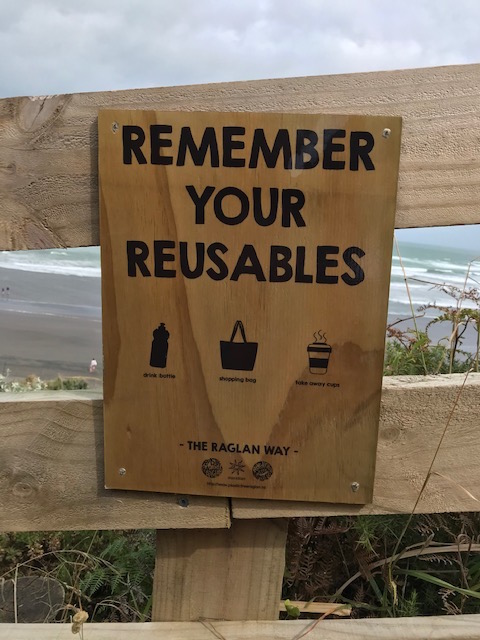
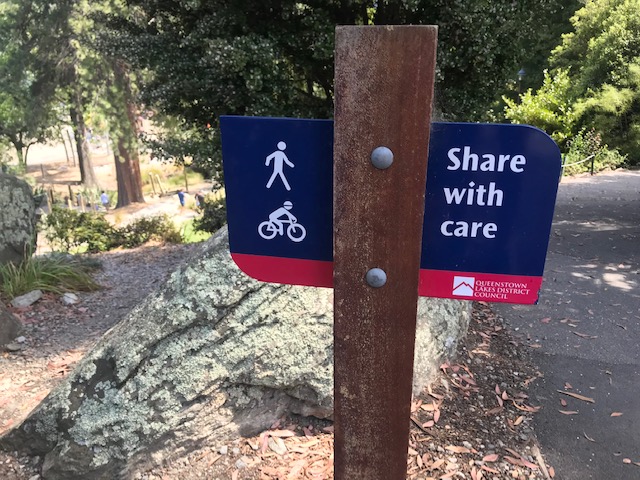
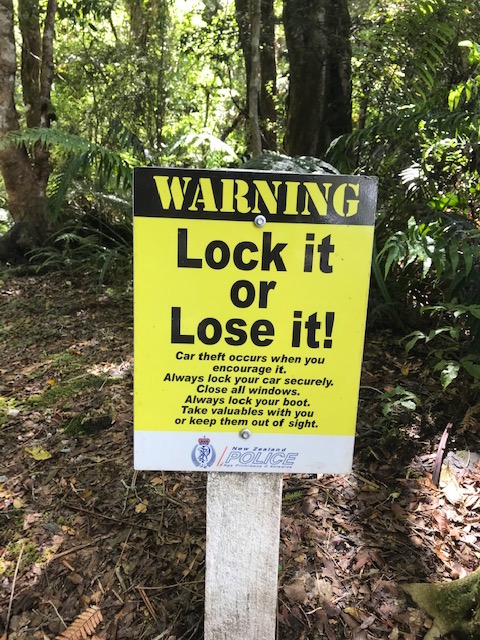
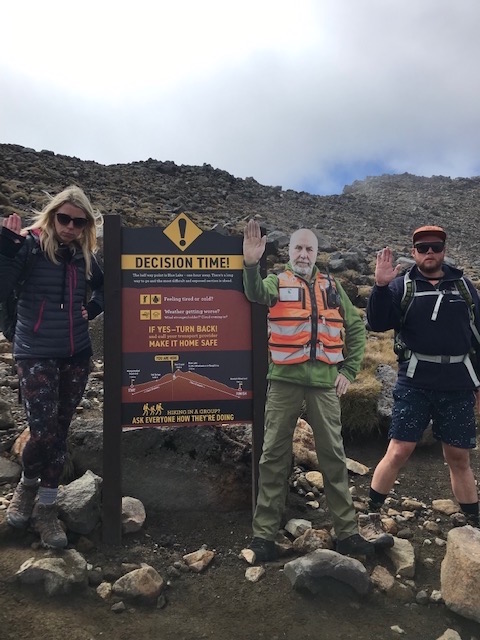
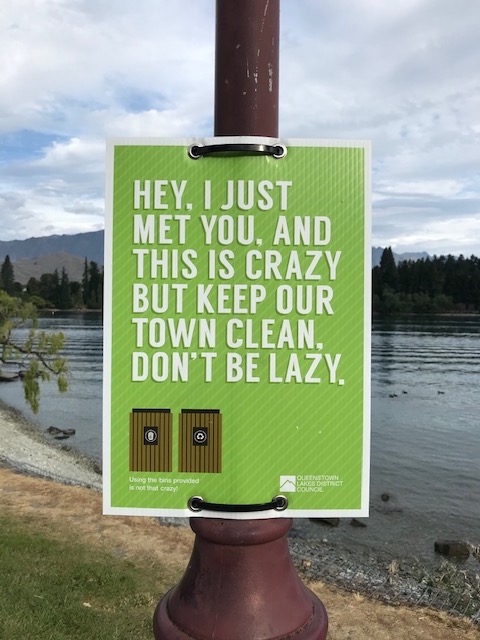
But even without the ease and “mindlessness” of Stray, New Zealand would have been a breeze to navigate on my own. Why? Because this country has signage like you’ve never seen before. It puts some of our communications in the States (cough cough, the MTA’s subway signs, cough, cough) to shame. SHAME. Driving down the road? There’s a sign for that. Hiking through a park? There’s a sign for that, too. Going to the beach? Guaranteed signage. Meandering through town? You’re hundo P going to encounter a few PSA’s along the way. Some signs had a more humorous angle. Others were serious warnings. But no matter the tone, no matter the subject, these signs captured the sense of order and organization that is part of the fabric of NZ. So I might as well let them speak for themselves.

As you can see, the signage in NZ knows no bounds.

And as if the prolific cautionary signage isn’t enough, New Zealand’s safety initiatives are on another level, too. The Kiwis are known for their plethora of adventure sports—skydiving, bungee jumping, canyoning, paragliding … the list goes on and on. Part of the reason so many people do these activities here is because New Zealand’s safety records are second to none.

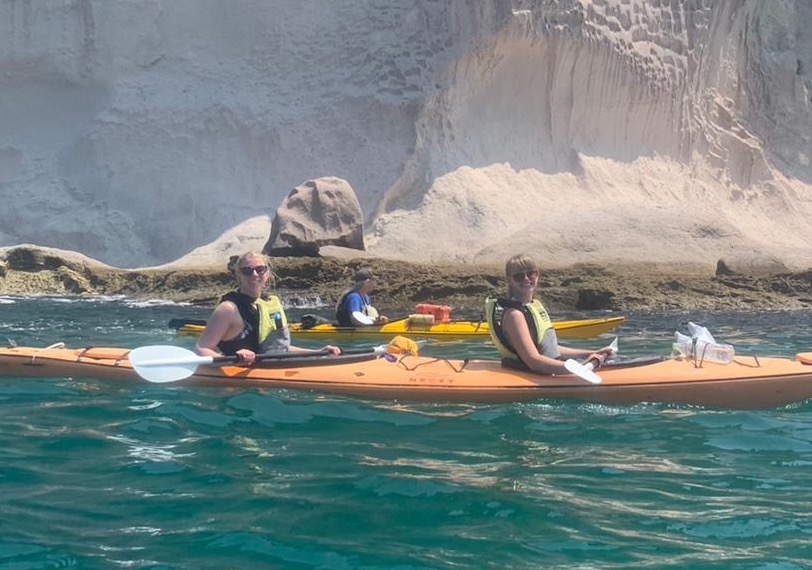
Here’s a good example: In Vietnam, I took a tour of Ha Long Bay where my kayak *literally* sank … twice. Luckily, we were by a little island when it happened, instead of in open water. Two guys in our group paddled out from the main boat to come rescue us, while our Vietnamese tour guide dealt with the capsizing kayak. When he finally returned, he blamed us for letting it “fill with water,” instead of acknowledging the very visible cracks in the exterior. By comparison, the kayaking tour I took of Cathedral Cove in New Zealand included a half-hour introductory session about what to do should an emergency occur! The contrasts were stark. 

Feeling super safe, even though we had no idea how to steer. 

A different kind of adventure

Having so many rules and regulations made travel in New Zealand more manageable. I felt like I could let my guard down. Breathe. Relax. None of that was ever possible in Asia.

But on the other hand, sometimes New Zealand felt too strict—too sanitized. Once, when calling a shuttle to take me to a trailhead a few miles outside of town, I was denied service because I was only one person.

“Sorry, ma’am. We require two people minimum with each reservation. You need to have a buddy with you on the trail, so you’ll be safe. It’s a liability for us to take you alone.”

Then, there was the time in Wellington where a few friends and I decided to grab spontaneous drinks by the water. The bartender refused to serve me because she couldn’t accept my non-New Zealand driver’s license and I didn’t have my passport (I had safely locked it up in the hostel). All of this, even though the drinking age in New Zealand is 18, and I’m almost a good decade older.

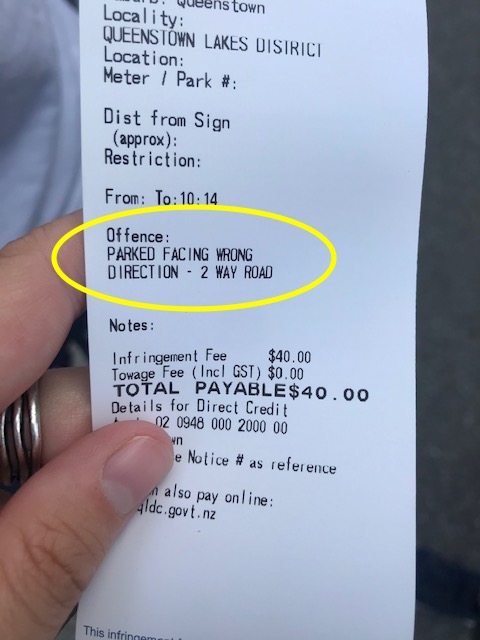
In some cases, New Zealand’s “protective” measures could feel frustrating and overbearing. It was the kind of place where you could—and would—get a write-up for the smallest infraction … like for parking your car in the wrong direction on the street, which my friends, Connor and Dylan, discovered a ticket for one morning. Its lawfulness and discipline made me comfortable and confident. But it also had me craving “real” adventure again—the kind you get a dime a dozen in Bolivia or Bangkok … the thrill of the uncertain, unregulated unknown.

A rude awakening … literally.

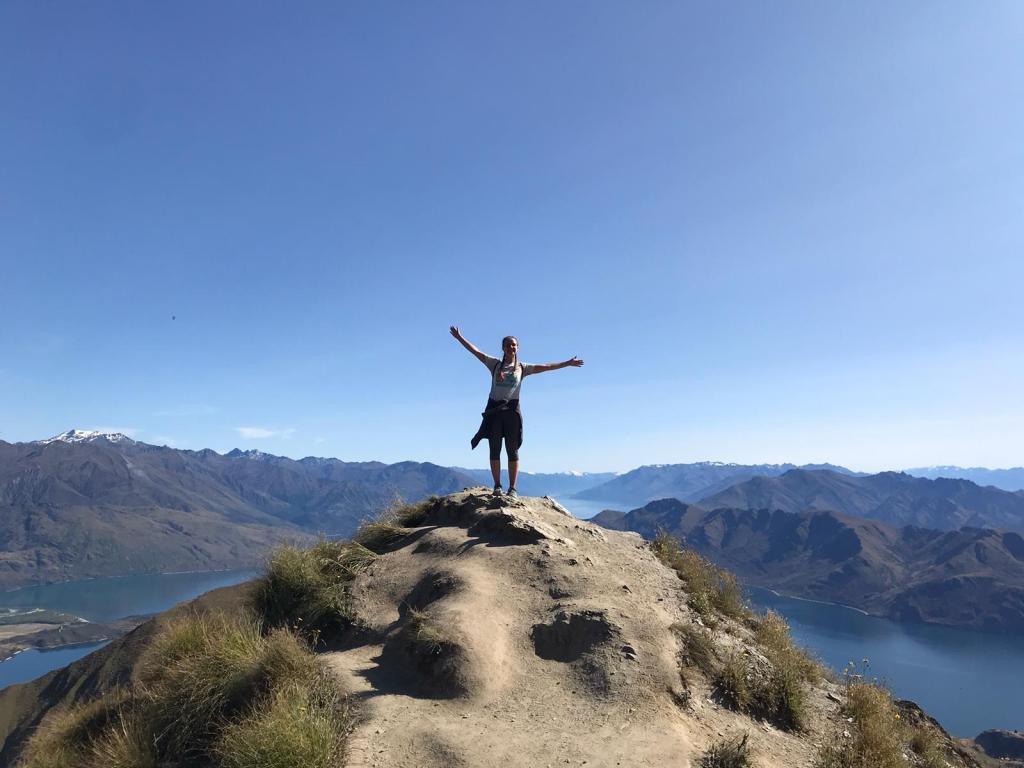
But what it was lacking in excitement, New Zealand made up for in pure, raw beauty—delivering sight after sight of nature to the n-th degree. From glaciers to green rolling hills; from fjords to Redwood forests to remote farms; from lakes and sulfur lagoons to rivers and rocky, volcanic treks. 

This kind of nature exists nowhere else.

New Zealand was a true marvel. Its rules helped me reset. And its nature rejuvenated me. By the time I had to leave, I was refreshed. Reinvigorated. Ready to go again. Only this time, I knew what was next. I had to go home.

Southeast Asia Update #3 (#12): “Fast & Furious: Vietnam Edition”

Good morning, Vietnam!

True life: I have never watched ANY of the “Fast & Furious” movies. Maybe you find this typical (I’m not really the target demo, anyhow). Maybe you find this offensive (sorry, Vin Diesel fans). Maybe you find it just plain weird (after all, there are nine films in the franchise … shouldn’t I have seen at least one?!)

But even though I haven’t seen the series, I’m pretty sure I’ve actually starred in the unnamed, upcoming 10th movie. The set? Vietnam. The storyline? One solo female traveller makes her way through the country from north to south, sometimes on a motorbike … but oftentimes on a crappy night bus. The catch? She has just 21 days to see nine cities, venture more than 1,200 miles, and soak it all in. 

“Beautiful” is an understatement.

Seriously, though—it may be a bad extended metaphor … but it’s what my experience in Vietnam *really* felt like. By U.S. standards, three weeks sounds like a more than generous amount of time to visit any country. In reality, no amount of time anywhere is ever enough—but especially in Vietnam. The country is teeming with incredible sights and sounds, insane nature, next-level flavor, and fascinating culture (particularly for Americans). Here’s a roundup of a few of my coolest adventures there that were action-movie worthy (at least for me ):


Motorbike mania

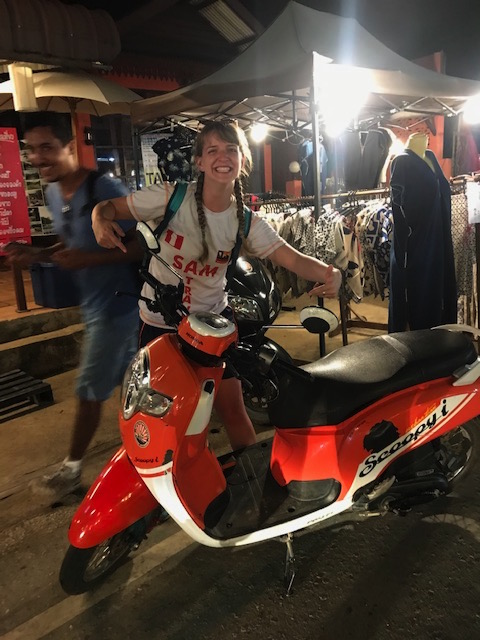
Motorbikes aren’t just a mode of transportation in Southeast Asia … they’re a way of life. Unfortunately, they were not a part of life that came naturally to me. I first hopped on a motorbike in Pai, Thailand. These scooters are literally a breeze to ride: there’s the gas handle, the two breaks, … and that’s it. You can’t even reverse them. You sit, and the bike goes. But for some reason—maybe because I don’t even drive cars that often living in New York City—scootin’ around tiny towns in Thailand was actually pretty stressful for me. Luckily, I had an amazing group of friends who would pull over every 10 minutes to wait for me to catch up as I moved at an actual glacial pace. Grandma’s here, ya’ll! 

Scoopy, my valiant steed in Thailand. Also I always had the junkbox of the scooters. Sometimes mine didn’t even have enough power to make it up hills …

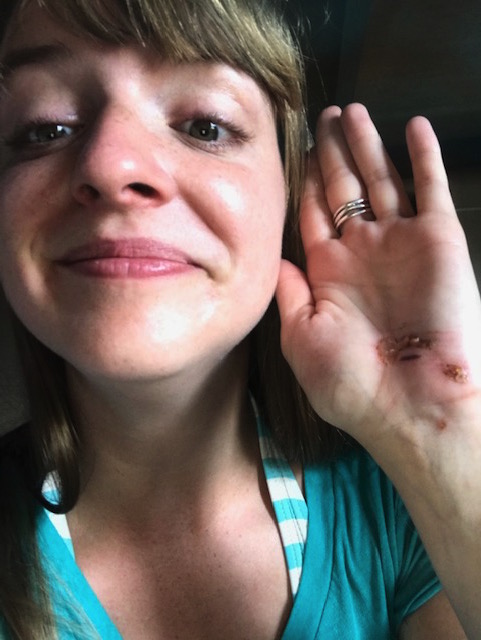
My anxiety was further compounded at one of my last stops in Thailand—Koh Lanta. A tiny island with one main road, I purposefully picked it as a destination because I thought motorbiking would be easier here. And it was. Over the course of two days, I felt like I was really starting to get the hang of riding. Until, that is, the accident. Biking with two other friends, we encountered slick roads on a very steep hill. My companion in front was riding slow—too slow. And just as I moved to pass him, he lost control of his bike … falling and taking me out in the process. I got quite a few scratches and bruises, but thankfully, nothing was actually broken—except my confidence.

Injuries: a little worse for wear, but nothing too tragic.

Enter Vietnam. Motorbikes abound. You can’t even cross the street because bikes are zipping and zooming in every possible direction (traffic lights, you ask?! Fuggedaboutit!). On my third day, I made the mistake of trying to walk between two different neighborhoods in Hanoi at rush hour. Every intersection took me at least three to five minutes to navigate—and raised my blood pressure by a few digits, too. Needless to say, after arriving in Vietnam, it became abundantly clear that I might not be able to avoid motorbike riding this time around.

So, I bit the bullet. At this point, my scabs from Thailand had turned into a couple of badass scars … which meant it was time to jump back on the bike—literally. On Cat Ba island, I once again got into the groove, scooting around beautiful roads with a lovely “biker gang” of new friends. And in Phong Nha National Park, I sped through the relatively open roads, hitting 60 km/hr (a real record for me), and observing nature in an entirely new way.

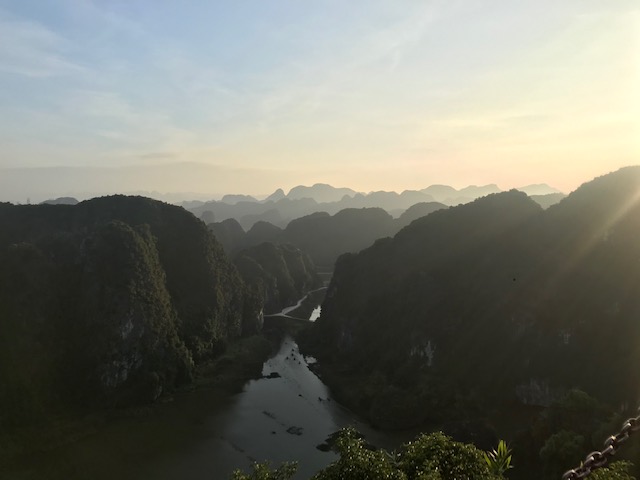
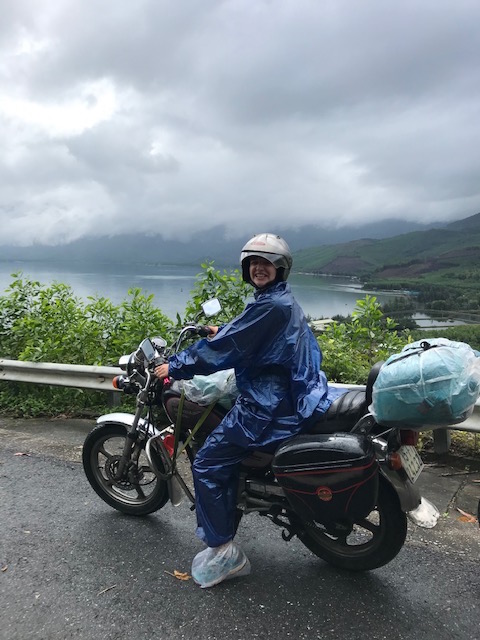
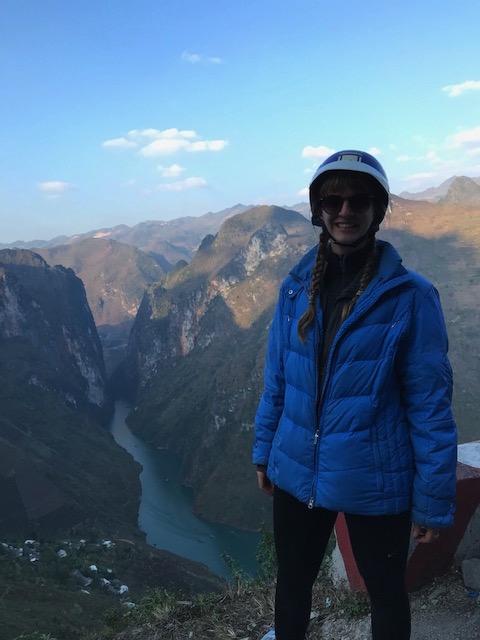
On other, more challenging routes, I hired easy riders, hopping on the back of an experienced driver’s bike where I could enjoy the view. These trips—the Ha Giang Loop and the Hai Van Pass—truly felt like once-in-a-lifetime journeys. The Loop, specifically, was something I don’t think I’ll ever get over, ever. Spellbinding? Breathtaking? Thrill-seeking? Awe-inspiring? Jaw-dropping? Answer: All of the above. Turns out that even with all the stress and anxiety, motorbiking still came with some pretty unbeatable perks—and absolutely blew my mind. This unique form of travel gave me a new perspective, along with memories I’ll remember for the rest of my life.

Hai Van and Ha Giang

Abandoned waterparks in ancient cities

Motorbiking may have been my main means of acquiring that adrenaline rush. But there were a few other events, too, that felt like they could only happen here—only in Vietnam. Like the time my friend, Tony, and I snuck into an abandoned waterpark in Hue, the country’s ancient capital.

Let me just clarify: the abandoned waterpark is not completely off the grid. Actually, it’s a really popular backpacker spot, well-documented on travel blogs and Instagram. Apparently, a big-deal company began construction on the park in 2004, but by 2006, it was abandoned … for reasons that even the most extensive Google search could not dig up.

From what we had read, there was very limited security; most accounts said you could just ride right in through the main gates. Some acquaintances we had met at our last hostel had breezed through earlier that same day. So Tony—my Australian buddy who conveniently spoke Vietnamese—and I called a Grab (like Uber for motorbikes) and paid our drivers to wait while we explored for a few hours.

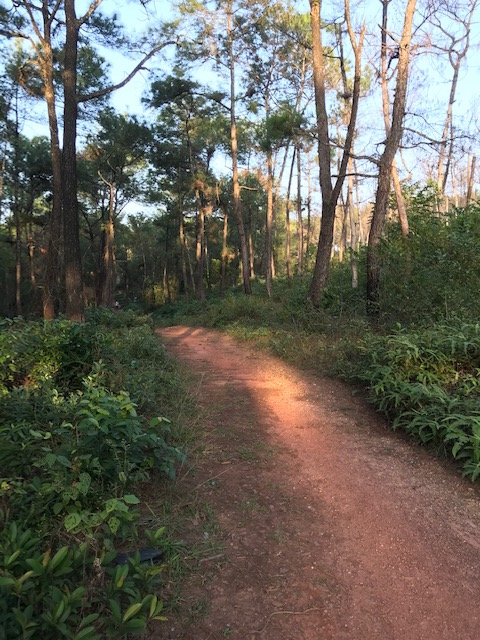
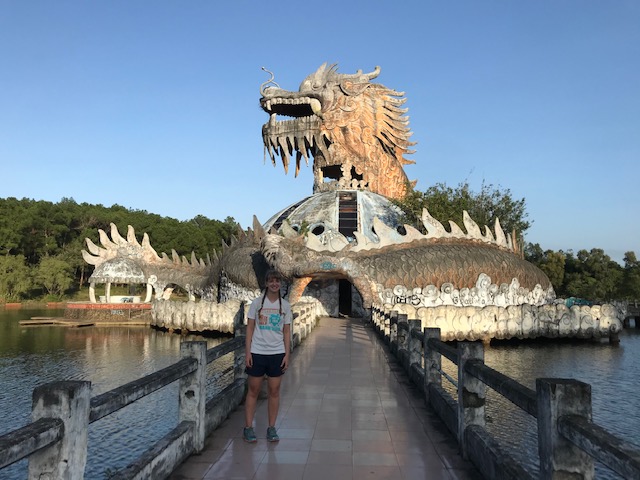
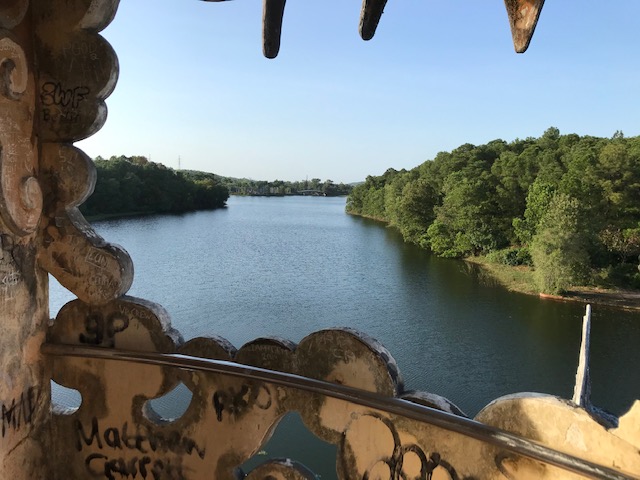
But alas, no such luck. A random “guard” drove up and shooed us away. Undeterred, Tony communicated with our drivers to bring us to the other entrance at the main gate. But, once again, the same guard was there, waiting with his sidekick. Tony tried and tried: bribes were offered, words were exchanged, but the guard was unyielding. Luckily, so was Tony. At this point, four other backpackers had also arrived, and we had become a motley crew of six. After driving out from view, we decided to proceed on foot, with Tony serving as our fearless leader. It felt like a real Odyssey: we walked through woods, past a church, and through a farm, until we arrived at a locked gate. After giving Tony a boost over the wall, he found a side path we could take inside. And third time’s a charm. At long-last, we had made it! Gazing across the park from the mouth of a giant cement dragon (that was once the main attraction), we laughed at a safe distance when we saw the same guard, angrily yelling at us across a lake as he made another round on his bike. Mysterious? Not so much. Creepy? Kind of. Fun? Hell yeah.

Into the woods on the way to the park.
Mythical dragon.
View from the top!

A very merry Christmas Eve from the Sixth Floor Bar

Alright, last one! For most, a typical Christmas Eves in the States may involve some sort of feast, church, and family. For me, it was a bit different … but in the most amazing way possible.

I got the feast, for sure—a mouthwateringly delicious family dinner at the hostel where I was staying in Dalat, a city about 7-8 hours away from Saigon. After dinner, a group of us decided to keep the merriment going at a place called Maze Bar, an establishment full of winding stairs, zig-zagging levels, and crazy nooks and crannies (modeled after another tourist site in the city, called “Crazy House”). Unfortunately, Maze Bar closed at 12 … as did most of the bars in the city, it seemed. But as we were making our exit, an American man wearing a boat hat pulled up front in a sketchy white van.

“Hey guys. Sixth Floor Bar is just down the road. Open all night. Let me know if you want in. I’ll drive you.”

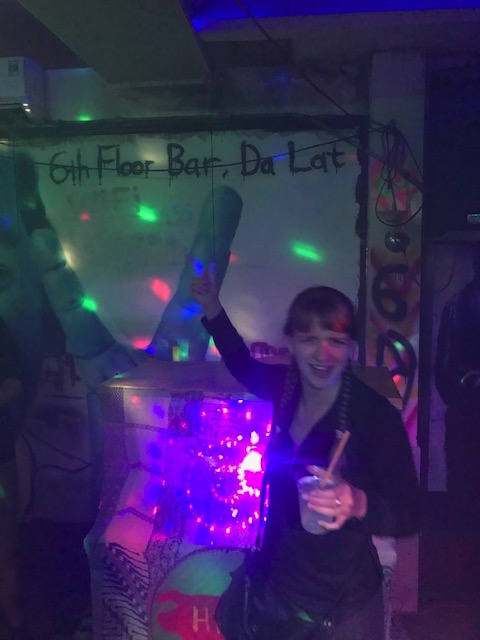
You know the expression, “When in Rome!”? It should definitely be changed to “When in Dalat!” We all looked at each other, shrugged our shoulders, and piled in (I’m not exaggerating when I say the van transformed into a straight-up clown car). Five minutes later, we approached what looked like a regular residential building and pulled into the garage. Was I thinking, “This is where I die.”? Maybe. But emboldened by our a large group, we loaded into the elevator, rode six floors to the top, and arrived at what was essentially an empty apartment with a dance floor—complete with strobe lights, glow in the dark paint, laughing gas balloons, and one of the greatest playlists of all time. And even though the place was literally *just us*, we partied hard—keeping the Christmas spirit going well into the early hours of the morning. It was a night that made the loneliness of missing home during the holidays feel a little bit farther away … and fun that I’ll never forget.

A memorable X-mas Eve.

Southeast Asia Update #2 (#11): Bad Tourist! 

Travel is incredible. And eye-opening. And life-changing. And sometimes, it sucks. 

I hit one of those lulls in Thailand. But first, let me clarify: my time in Thailand was absolutely amazing. I met some awesome people, many of whom I’m still in touch with. I ate delicious dishes on the daily. I went to colorful markets where everything was super cheap. What’s not to love? 

Some of the awesome people I met in Thailand^^^

But, I was tired. No, I was exhausted. Approaching five months of travel, I had just thrown out all of the cultural capital I’d built up on one continent to shake things up again on another. And even though Thailand is probably the most tourist-friendly country in the region, it was still overwhelming to me. 

So, I became a bad tourist. 

Tongue-tied in Thailand

Let’s start with language. I’ve never exactly been a language person, but in South America, I made it work. I could order food, ask for directions, and have simple conversations with my cab or uber drivers (they were usually trapped in a car with me for at least 20 minutes, so had no choice but to chit chat with yours truly). I was able to practice and improve—and I appreciated the countries I visited so much more because I could read signs and understand at least *some* locals. 

Southeast Asia was a different story. It’s not like anyone expected me to learn Thai. But I couldn’t even say names of places. All the islands started with “Koh.” Koh Lanta. Koh Lipe. Koh Phi Phi. Koh Phangan. For the first half of my trip, I couldn’t remember which was which. People would ask, “Oh, what islands do you plan on visiting?!” My response: “Errmmm, ‘Koh’ something?!” Solid. I also struggled to use basic phrases (with the exception of “mai pet,” which I nailed pretty quickly, since it means “not spicy.”). In Thai, “Kap koon kah” (phonetic) means “thank you.” For the life of me, I could not get the order of the words right. Buy a ticket for the ferry: “Kah kap koon!” Order mango sticky rice: “Koon kah kap!” Ask for information at the temple: “Kap kah koon!” I started purposely laughing every time I attempted the phrase to indicate to locals that at least I KNEW that I had no idea what I was saying. Thankfully, they seemed to think my ”thank yous” were endearing. 

Made it to one of the Kohs: Phi Phi!

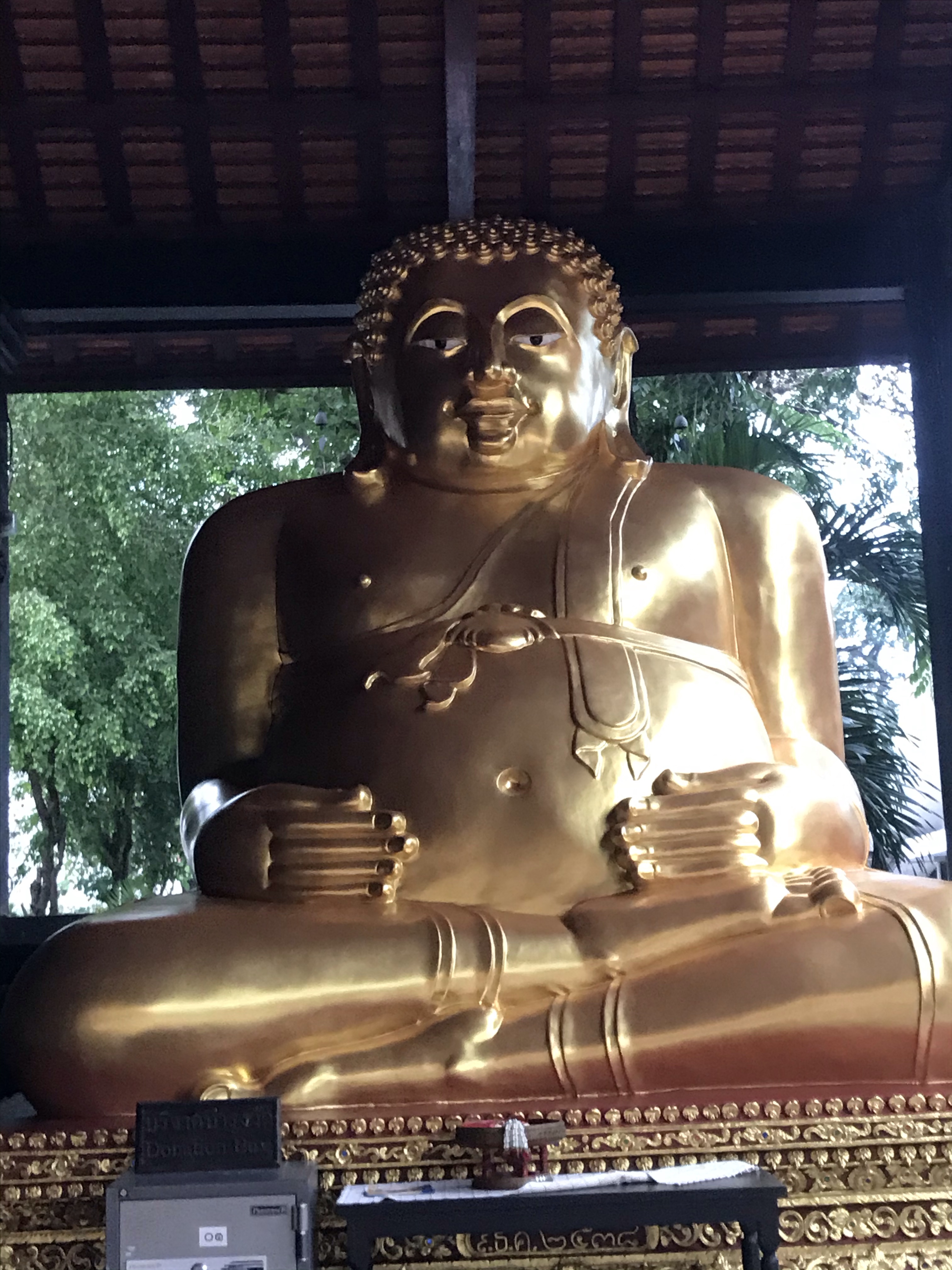
Buddha, buddha, buddha, buddha, buddha rocking everywhere

Now, let’s talk religion. In Thailand, I visited roughly 837 million temples. That’s just an estimate. I’m sure the real number was far higher. Temples in Southeast Asia are like churches in Italy. Ornate, insanely beautiful, and absolutely everywhere. At first, I was all about the temples. I took pictures of each intricately carved column and golden Buddha sculpture (and let me tell you, there were a lot). But after a while, they all began to blend together, and I started getting, well, bored. As temple fatigue set in, any desire to learn went out. During my visit, I learned next to nothing about Buddhism … even though I visited hundreds of holy sites. Four Noble Truths? Eightfold Path? It’s actually easier to count all the things I don’t know about Buddhism than all the things I do. 

Temples #7, #45, #108, and #202, respectively

A white, Western playground

Finally, let’s discuss stereotypes. The ”traveler demographic” in Thailand is a lot different than South America. Because it has a stronger tourist infrastructure and since everything is so inexpensive there, Southeast Asia (and Thailand, in particular) is a great place to try out backpacking for the first time. The environment is teeming with young European teens and twenty-somethings fresh out of high school and college. Untethered to the real world and unleashed from any actual responsibilities, these kids––and yes, they’re basically kids––weren’t always on the same page as me. They wanted to drink. Smoke. Party. Repeat. And hey, I don’t have a problem with that … except that I just couldn’t keep up. 

Nor did I really want to. In Pai, I stayed at a hostel that, at times, almost felt like a commune. Everyone I spoke to had recommended it. The facilities were new, the activities were fantastic (by day, the hostel planned motorbike trips; by night, there was always an opportunity to booze), and most people were decently friendly. But there was a cliquey-ness to the place. A lot of the staff seemed like ex-frat boys trying to escape life back home. Most of the guests could be found lounging around on bean bags for the majority of the day. Were these really my people? Luckily, I had already cultivated a group of older-twenties / early-thirties buddies in Bangkok and Chiang Mai who became real friends. But trying to keep up with the other cool kids ended up setting me back. One 4 a.m. night and 8+ drinks later, I was looking just like everyone else in the bean bag chairs. I slept the whole day and ultimately ended up getting sick a week later. In that moment, I was just another wild, Western, white tourist. Not my best look. 

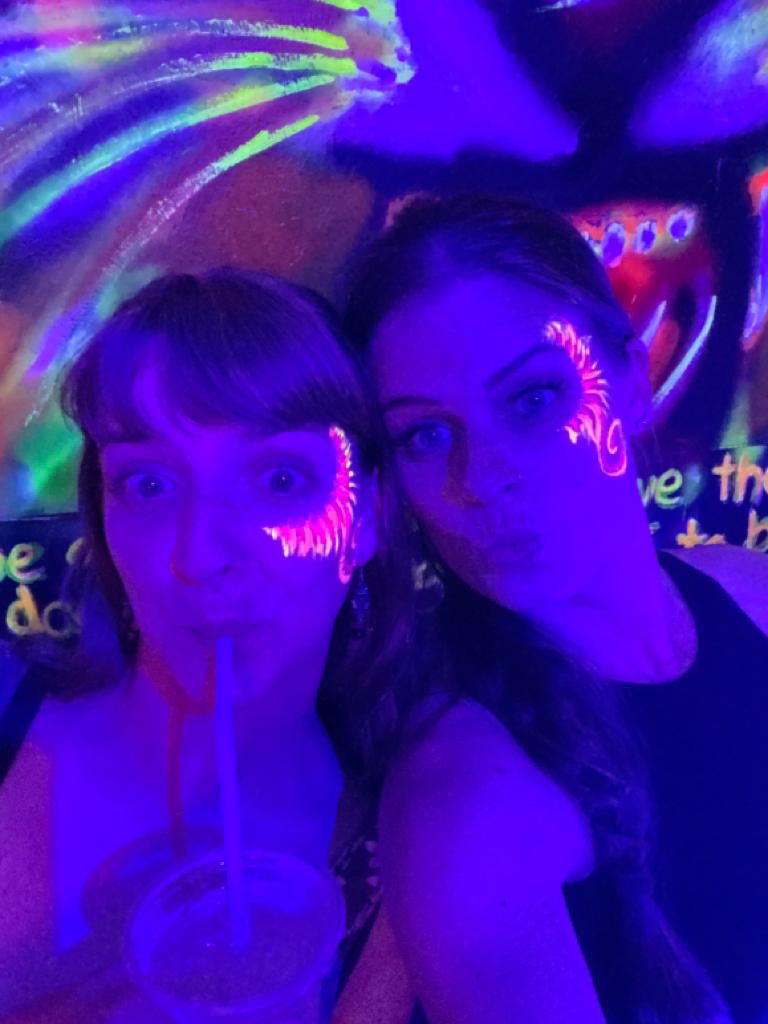
My friend, Karli and I, trying to hang at the neon bar with the youngins’ … we put up a good fight, but the next day was pretty brutal

It’s all relative 

At the end of the day, I didn’t make any egregious mistakes in Thailand. But during the month I spent there, I was less curious. Less proactive. Less engaged. And I guess … that’s okay. Every traveler is a student of the world. But we can’t get top honors all the time. In Thailand, my performance was maybe a B- … but, thankfully, I still had an A+ time 😊

Southeast Asia Update #1 (#10): Reverse, Reverse!

*Disclaimer: Might have stolen this subject line from the “Cha Cha Slide”. Credit where credit is due 👍

Though they both share the same first name, South America and Southeast Asia are in no way close nor well connected. Bummer! After finally settling on Thailand as my next destination, I had a new challenge: how to get there? Buenos Aires to Bangkok ain’t a cheap flight—and it’s not convenient either. After sifting through what seemed like an endless amount of transportation options for days on end (it is surprisingly hard to plan travel when you have *literally* no parameters), I finally found a combo that worked: two separate flights—one from Buenos Aires to London, and then the second, five days later, from London to Bangkok. It was the perfect plan: somehow this route ended up being less expensive, would be better on the body, and afforded me some time to explore a city I hadn’t been to in over 10 years. London, baby!!! Here we come. 

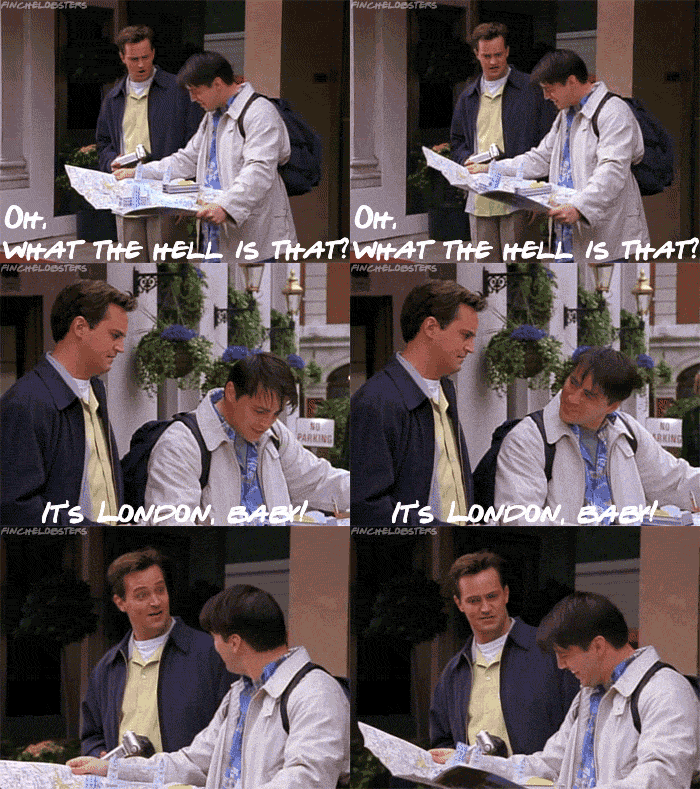
Joey, I FEEL you!

In a way, stopping over in London was also a strategic decision. It was a chance for me to reboot in the Western world. To be at ease in a big city, just for a few days. To speak my own language again. To feel a bit of fall—a season I’d all but skipped this year. It was similar enough to New York to give me the little hit I needed to keep on keeping on. London, baby!! I was ready.

But what I didn’t anticipate was how … abrupt, for lack of a better term, the transition to and from London would be. While Buenos Aires was no doubt a sophisticated city, London was truly next level. My flight was due in at 3:00 am, and for my first night, I had decided to stay at a little inn close to the airport to avoid dealing with long, late-night public transportation to my hostel. I landed in Gatwick on time to a T. After arriving in customs, my US passport put me in a priority line—one where there was no line at all. I simply went up to a machine, scanned my passport, stared into a camera, took a photo, and was directed by a soothing robot voice to walk through a glass gate and into the UK. London, baby! I had made it! 

After sailing through customs, I walked through the airport to a taxi stand. An attendant entered my destination into a computer, which then electronically appeared on my driver’s iPhone. He walked me to the car, which, I kid you not, opened upwards like a freaking bat mobile. Five minutes later, I was dropped off at a small cottage where the receptionist had left a printed note, my key, and the wifi password on the entrance table. It was almost eerie how smooth, convenient, and automated everything was. London, baby! We are NOT in South America anymore. 

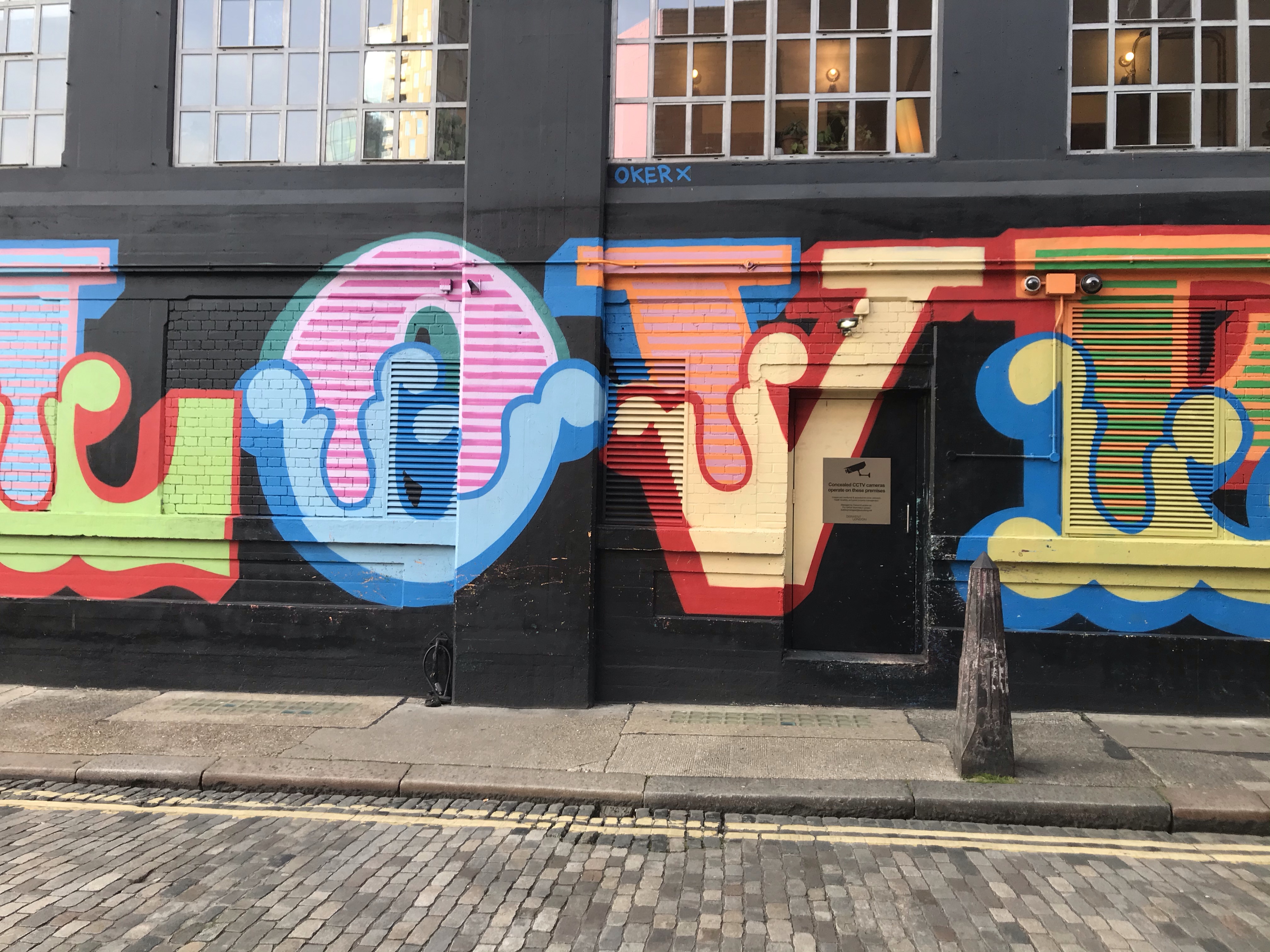
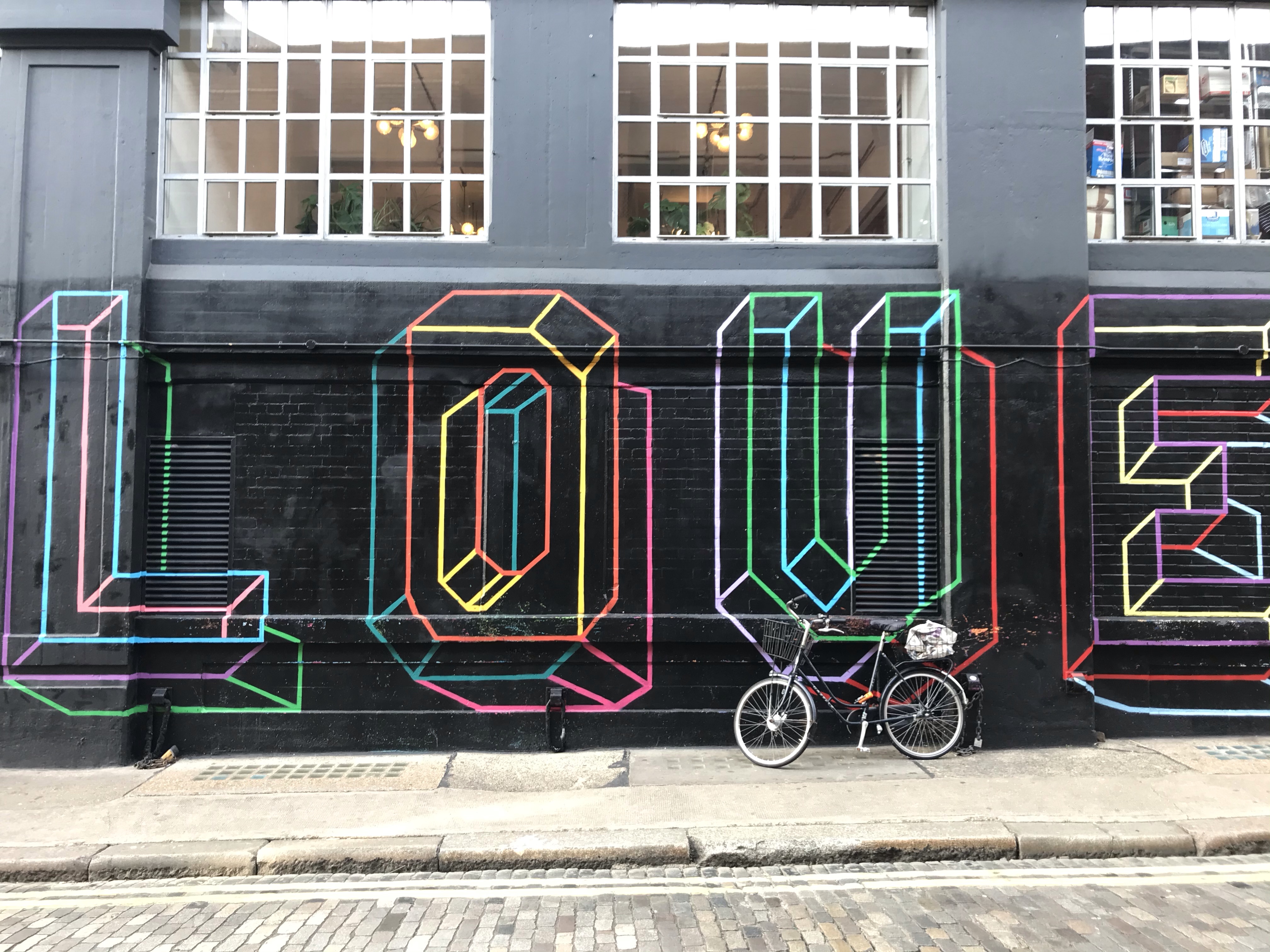
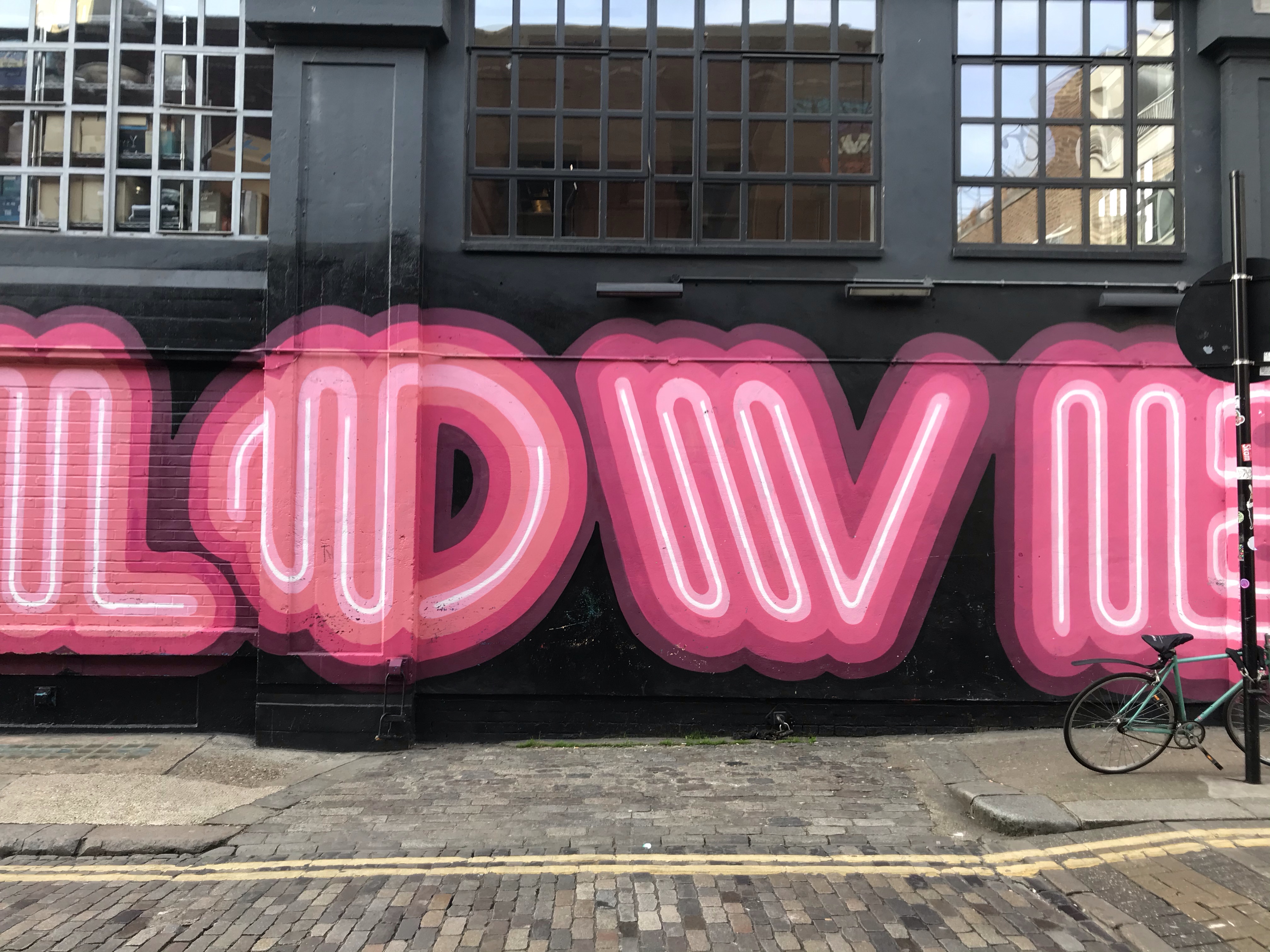
Loving London: scenes from Shoreditch.

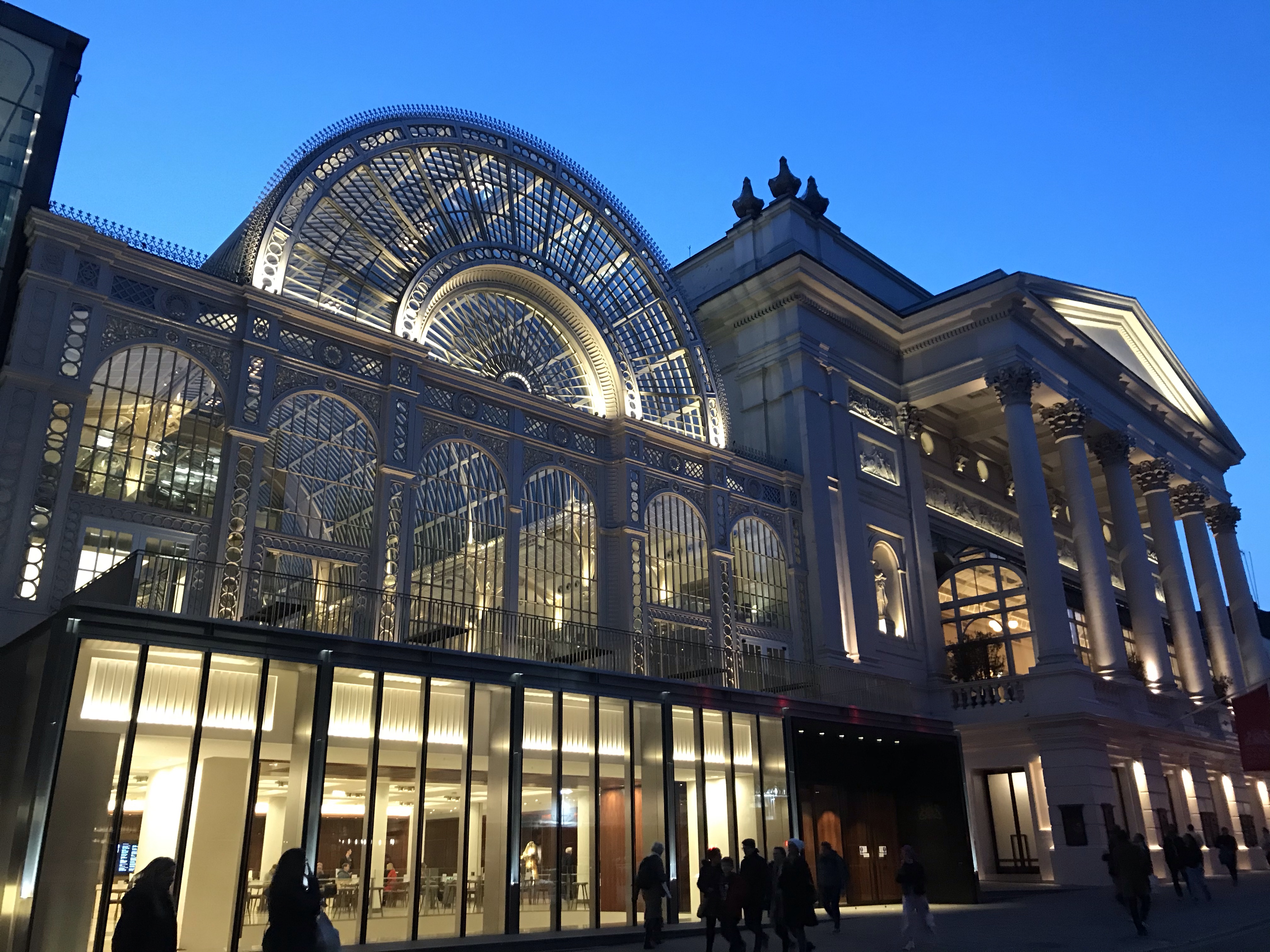
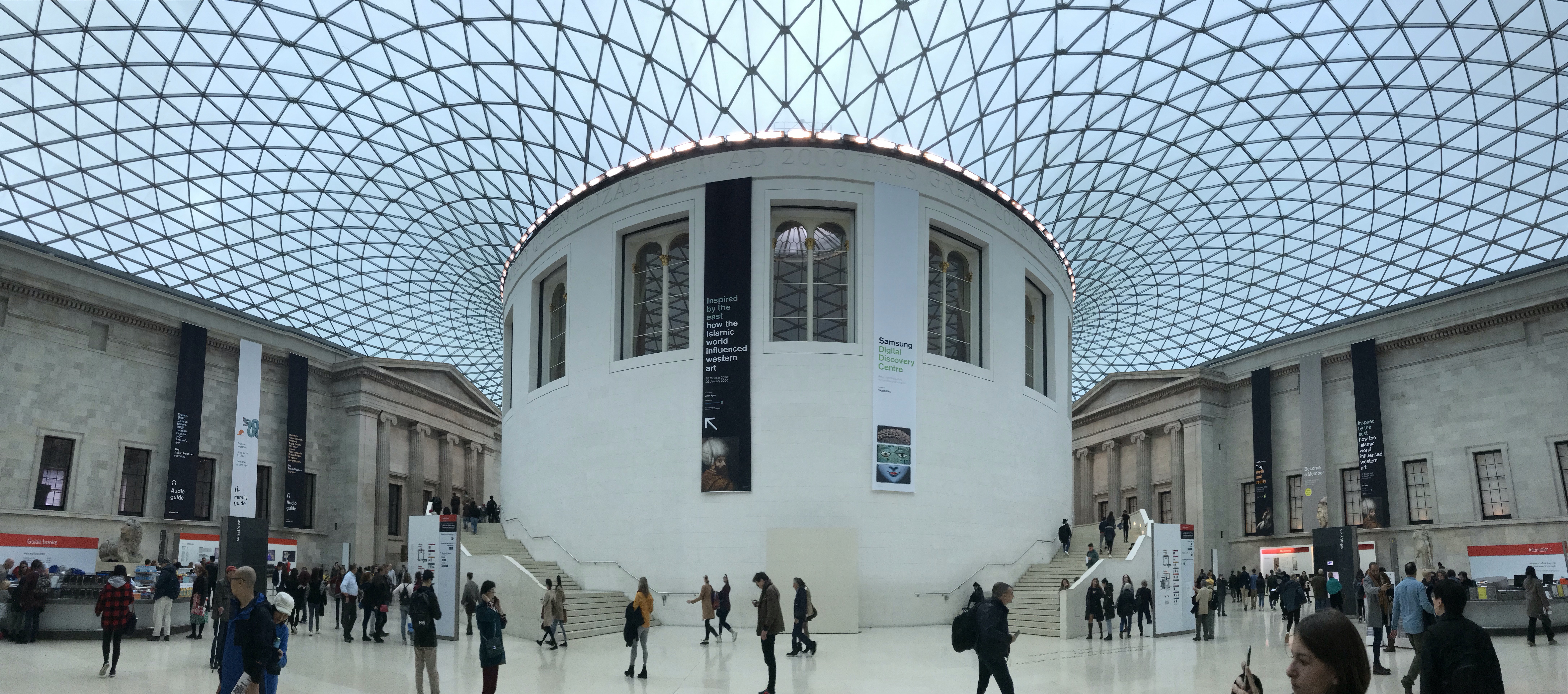
Over the next four days, I embraced this efficiency everywhere I could—and tried to take in everything London had to offer. I rode the highly prompt, incredibly clean Tube to Camden and Shoreditch. I paid for each meal and drink with my contactless credit card—even when buying from street vendors. I enjoyed beautiful buildings like the opera house and the British Museum. And, above all else, I relished the orderly, the navigable, the pristine, the safe. I felt like an addict getting my fix—high on English and history, on cozy pubs and sprawling parks, and, most of all, the feeling of home. London, baby! I couldn’t get enough. 

Admiring British architecture
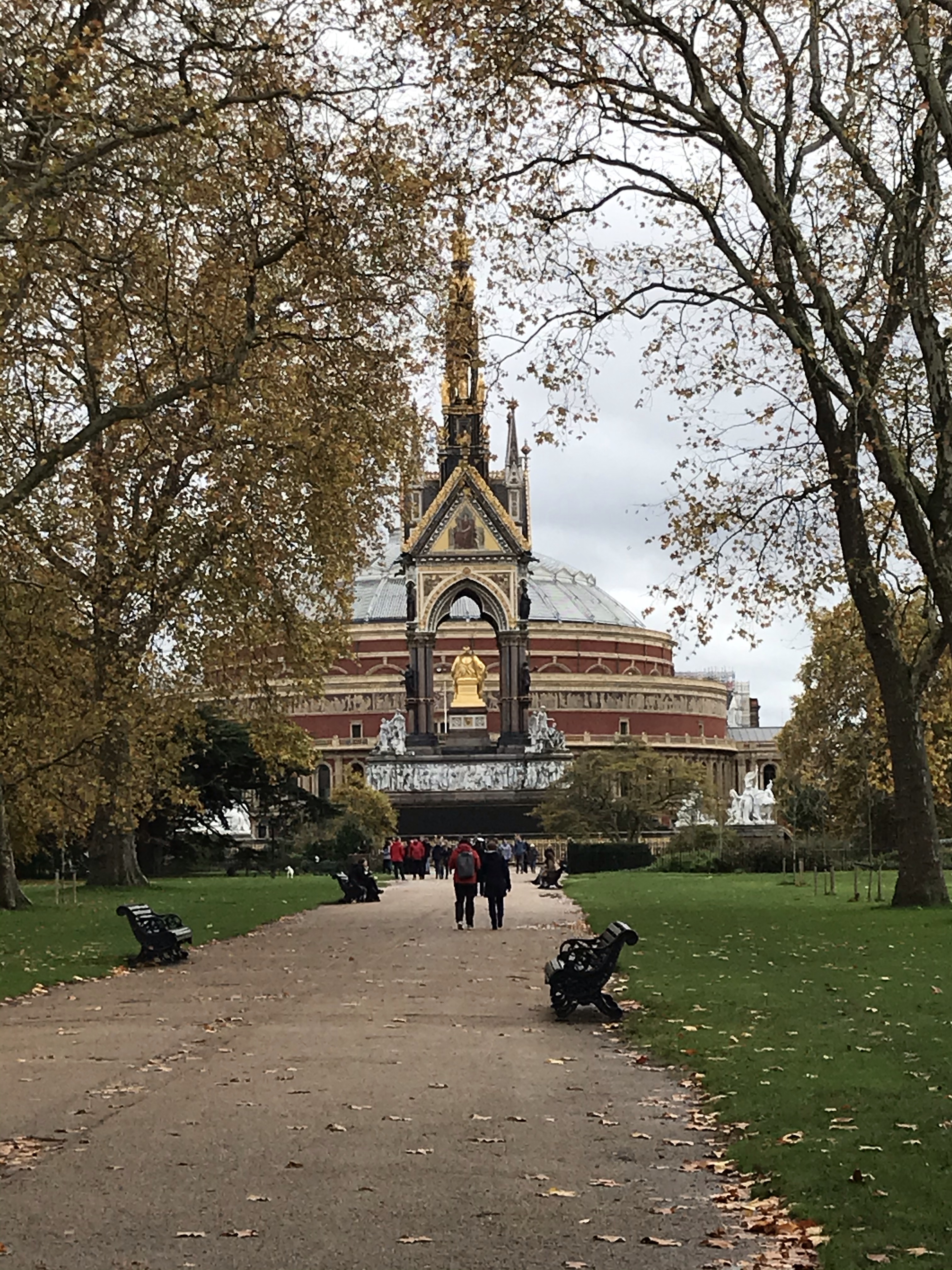
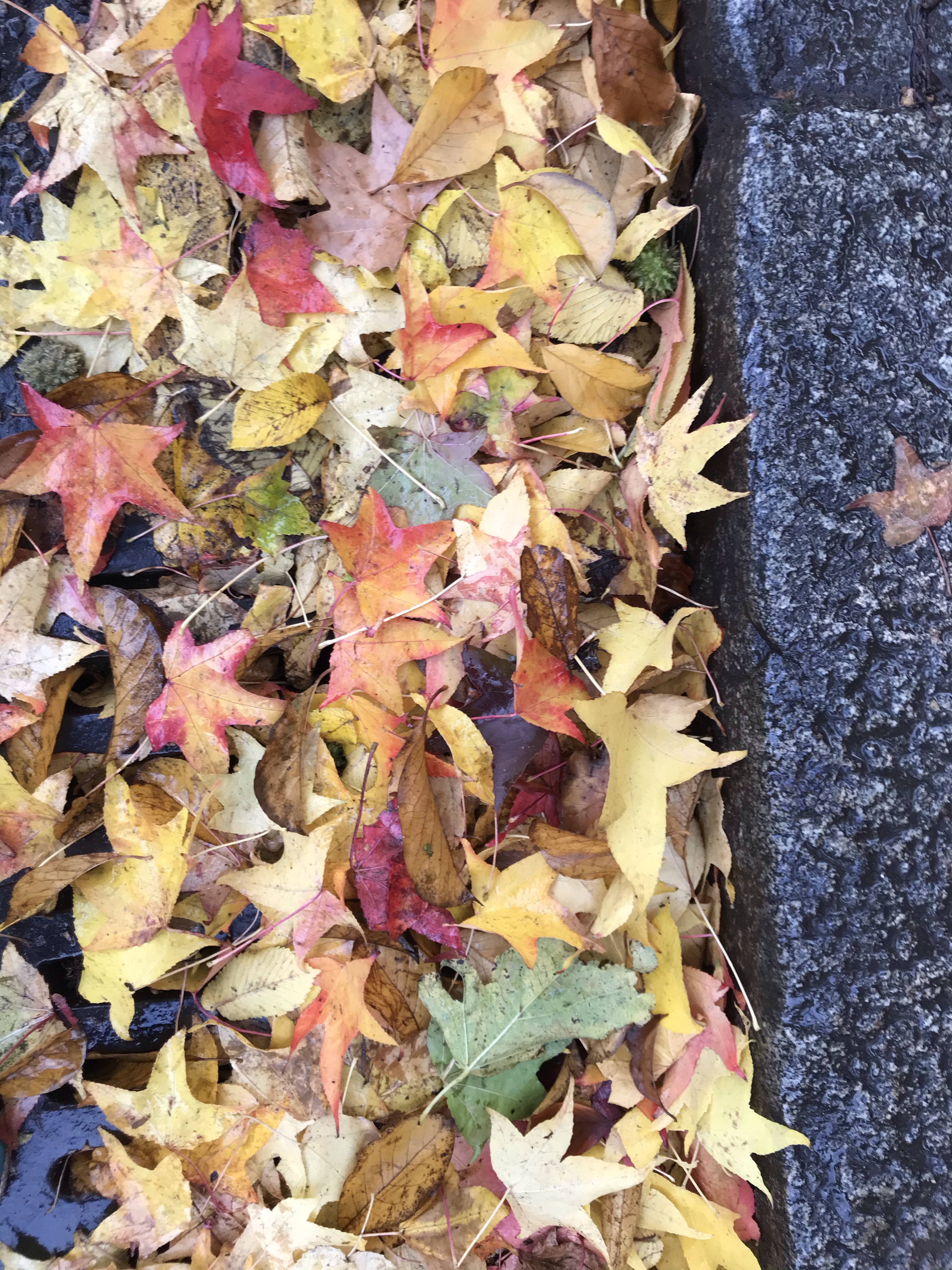
Embracing fall in Kensington Gardens and Notting Hill

But then, my time was up … and Thailand was up next. My personal rendezvous in London was meant to be an exciting pitstop on the way to another adventure. But now, I was beginning to worry it would feel more like cultural waterboarding. After forcing myself face first into the intense, unfamiliar environment of South America for four months, I was able to come up for air in London—to breathe easy and let my guard down just a bit—only to plunge back into another crazy and chaotic place. I was trading cabs for tuk tuks. Full toilets for squatty potties. Price tags for haggling. And the elegant Regent Street for the wild Khao San Road. Even though this waterboarding was mental, my neck could still practically feel the whiplash. 

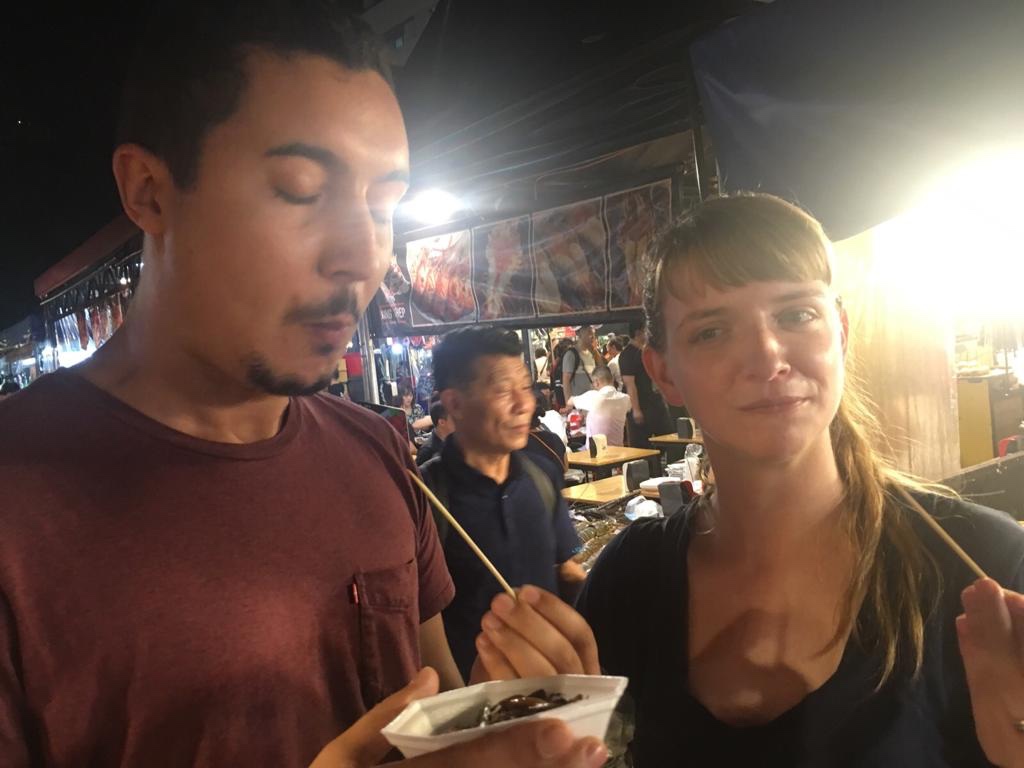
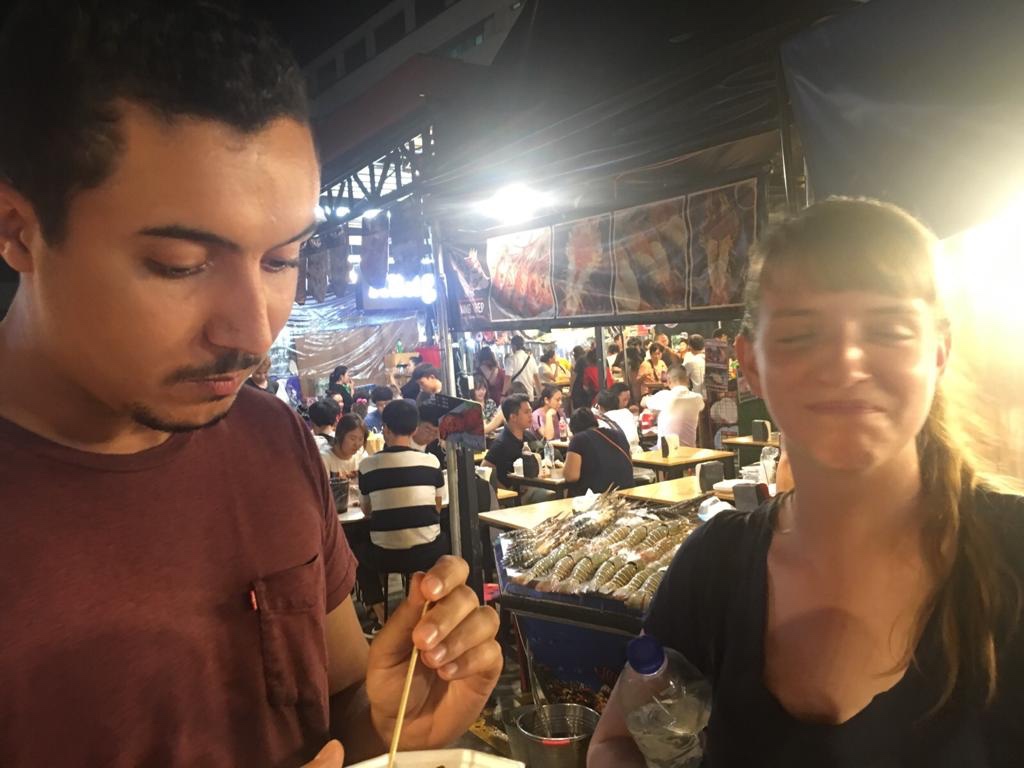
All in. Trying crickets in Bangkok with Tarik: a series. (Despite the look on my face, they’re actually really good!) 

In reality, though, my transition to Bangkok was actually pretty seamless. I met a Thai guy on the plane who’d grown up in New York, and drove me all the way to my hostel himself. I discovered and downloaded the app, Grab—the Uber of Southeast Asia. My accommodations were actually nicer than those in London, and for a fraction of the price! And I could get Pad Thai or Pad See Ew on pretty much every block … ahhhh, just like being back on 9th Avenue in Hell’s Kitchen. Sure, Thailand was still verrryyy different than my previous destination. But it wasn’t anything I couldn’t handle. And sometimes the best way to get to know a country is to just dive right in.

Cheers ya’ll,

Caroline

South American Update #9: Good Timing. Great Times.

*Disclaimer: I’m very much behind on these. Hope you can still enjoy my retroactive “blogging” and social media posts :). 

After more than four very full months in South America, I had to say goodbye. My last few weeks on the continent were spent in Argentina, where I embraced much needed visits with familiar faces in Buenos Aires and experienced the beauty of Patagonia with new, true friends—both of which were some of the biggest highlights of my trip. My heart was full and my mind was happy—but my feet were itching for the next adventure. It was time to go. 

Fun with friends and scenes from my final days in Buenos Aires

Ironically, though my final moments in South America were ending on a high note, the political situation across many of its countries was hitting new lows. Protests were exploding across Ecuador. Violent riots were breaking out in Chile, where I’d just been less than a month before. There was a constitutional crisis in Peru; accusations of corruption, election fraud, and the fall of a president in Bolivia; and elections in Argentina that ushered in new leadership promising to curb the inflation that had infected the country. All of these events came to a boil right around my departure. On the surface, it seemed there was no better time to leave. But in reality, it didn’t make my separation any easier. 

Because the truth was that I’d grown really attached to South America. My trip had taken me through six countries on 10 flights and nearly 20 bus trips. And every stop along the way left me with more reasons to appreciate this incredible continent and its culture. Here’s just a few examples of the little, random things I love dearly about SA:

  1. Everything—and I mean everything—comes in a bag. Shampoo is not packaged in a bottle. Mayonnaise is not sold in a jar. Juice is not poured in a cup. For better or for worse, all liquidly substances down here are put in plastic bags. If you’re lucky, your bag may be resealable or have a nozzle. But don’t count on it.
     
  2. Dogs are like squirrels. They’re everywhere. For dog people, this is both fantastic and also equally challenging—it can be hard to restrain yourself from petting the cute street pups. Most are aloof, many are friendly, and one humped me twice (a semi-traumatic experience for both me and my mom). But still, I miss seeing these canine companions on every corner.

Street dogs beggin’ for some lovin’ in Colombia

  1. South Americans have a deep, strange obsession with all things chewy. In any street stand, in any market, you will inevitably find an abundance of custardy treats and gummy snacks. And as someone who often craves this texture, I was never at a loss for flan, pudding, Jell-O (seriously … Jell-O is like the international dessert of South America), or marshmallowy candy.
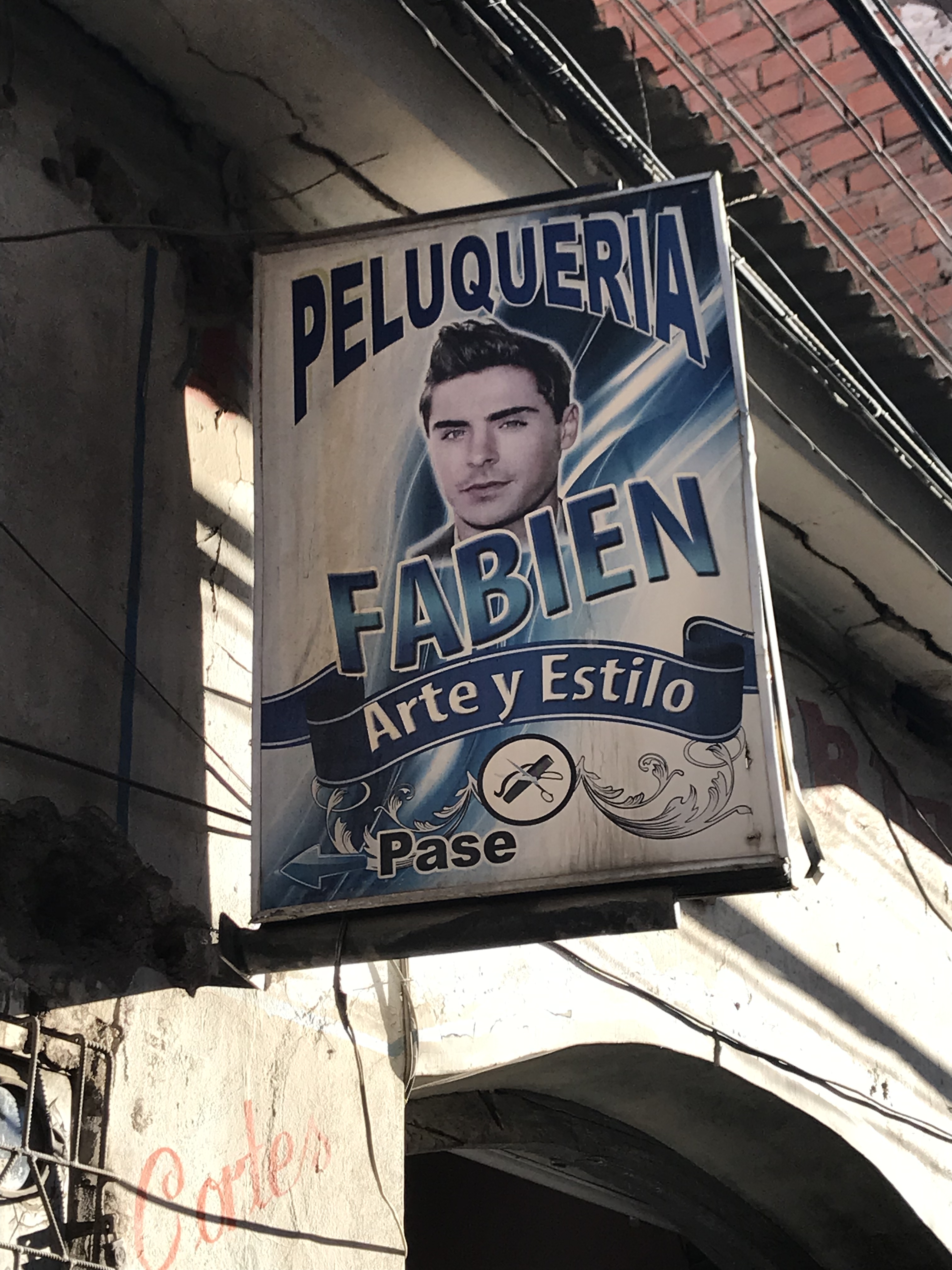
  2. Even though countries in South America have their own celebrities—reggaeton singers, soccer stars, and other heroes—for some reason, they still love to advertise famous “global” figures on their salon signs. Pictures of Zac Efron’s fade haircut or Zayn’s faux hawk abound. Taylor Swift’s bangs and Jennifer Aniston’s early-aughts layers are all around. It’s a funny sight and reminder of how “Western” culture influences all parts of the world … even in the places you’d least expect it. 
What’s up, Zac?!
  1. From Colombia to Bolivia to Argentina, in South America there are always fewer regulations and less organization—and yet systems still work. Things still get done. And life is often simpler for it. Instead of waiting at a bus stop, just flag one down on the side of the road. Instead of buying a ticket in advance, just show up at the station a few minutes before you want leave. There’s a freedom that comes with this way of life—one that can be hard to find in more structured places, like the U.S. 

I could wax poetic about the big things I’ll miss in South America—the beauty of its landscapes, the kindness of its people, the absolute excitement I felt in every country I visited. But sometimes, what we remember most are the tiny quirks and small details.

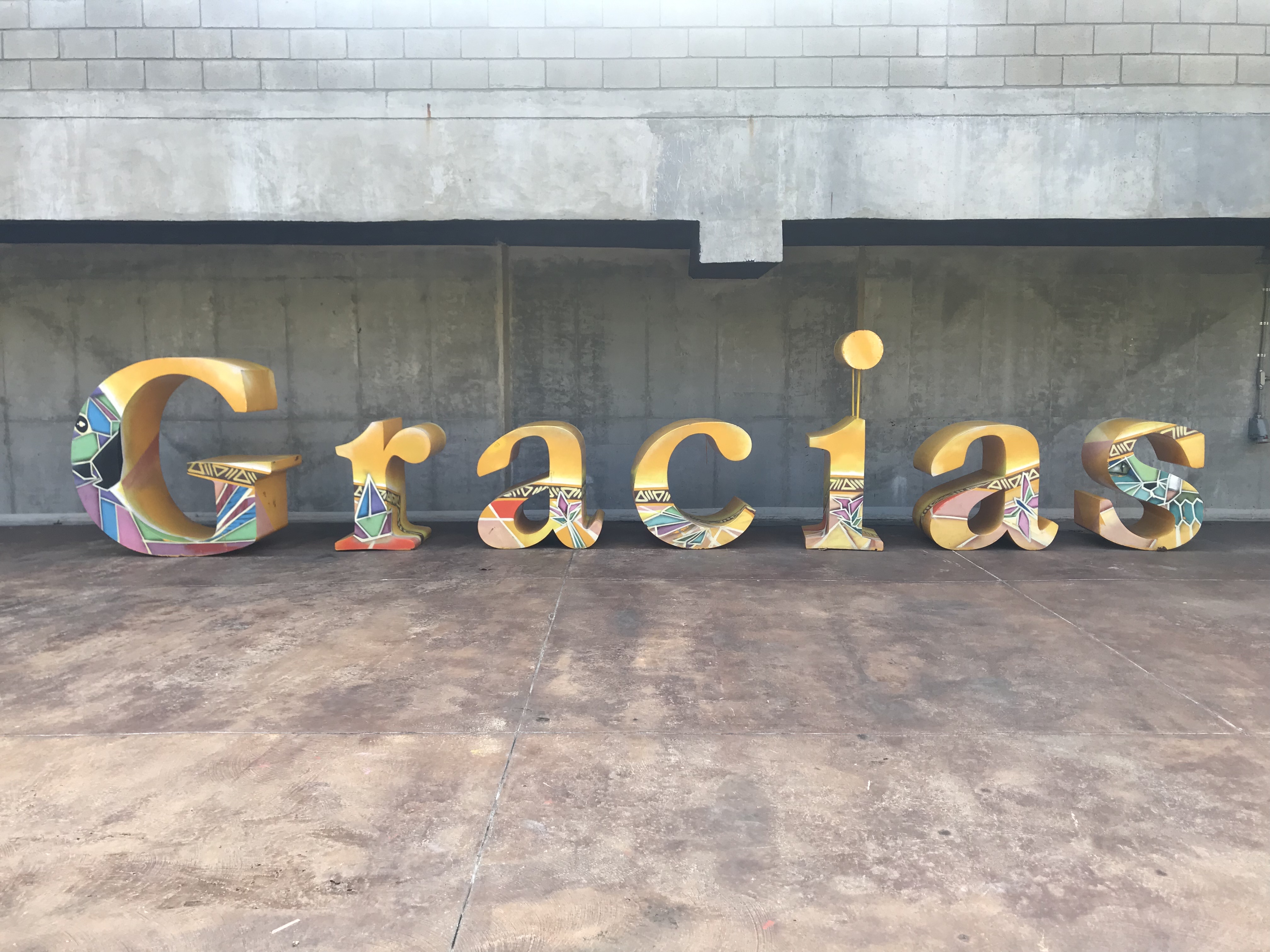
Thanks for everything, South America

So folks, these are my last musings on South America. (Although, if you want to hear more, check out the playlist I made to remember my trip here. I promise, it will get you pumped up at the pregame. “Calma – Remix” is my all-time fav, so give it a listen.) The next update you’ll get from me will be all about Southeast Asia! As always, thanks for reading. Miss you all mucho, mucho, mucho ❤️. And here’s one last Spanish sign off for the road. 

Hasta que proxima vez,

Caroline

South American Update #8: Finding Familiarity in a Foreign City

**Sorry for the lag, ya’ll! I know none of you are exactly waiting with bated breath for these newsletters, but I have dropped off in the last month, and I apologize! Will try to make up for it in the coming weeks :)**

On the hunt for that BCE

I’ve said it before, and I’ll say it again. I’m a city girl, tried and true. But very soon after embarking on this journey, I realized that cities were not going to be the main attraction on my trip. That’s not to say I haven’t appreciated the many capitals and urban centers I’ve been to down here … it’s just that I know no city in South America will ever hold a candle to mine. 

Or so I thought. At three months in, I was beginning to miss New York. Enough time had passed to make the little luxuries of home seem quite distant, and I noticed the first signs of withdrawal starting to come on. But thankfully, my symptoms had a cure: Buenos Aires. 

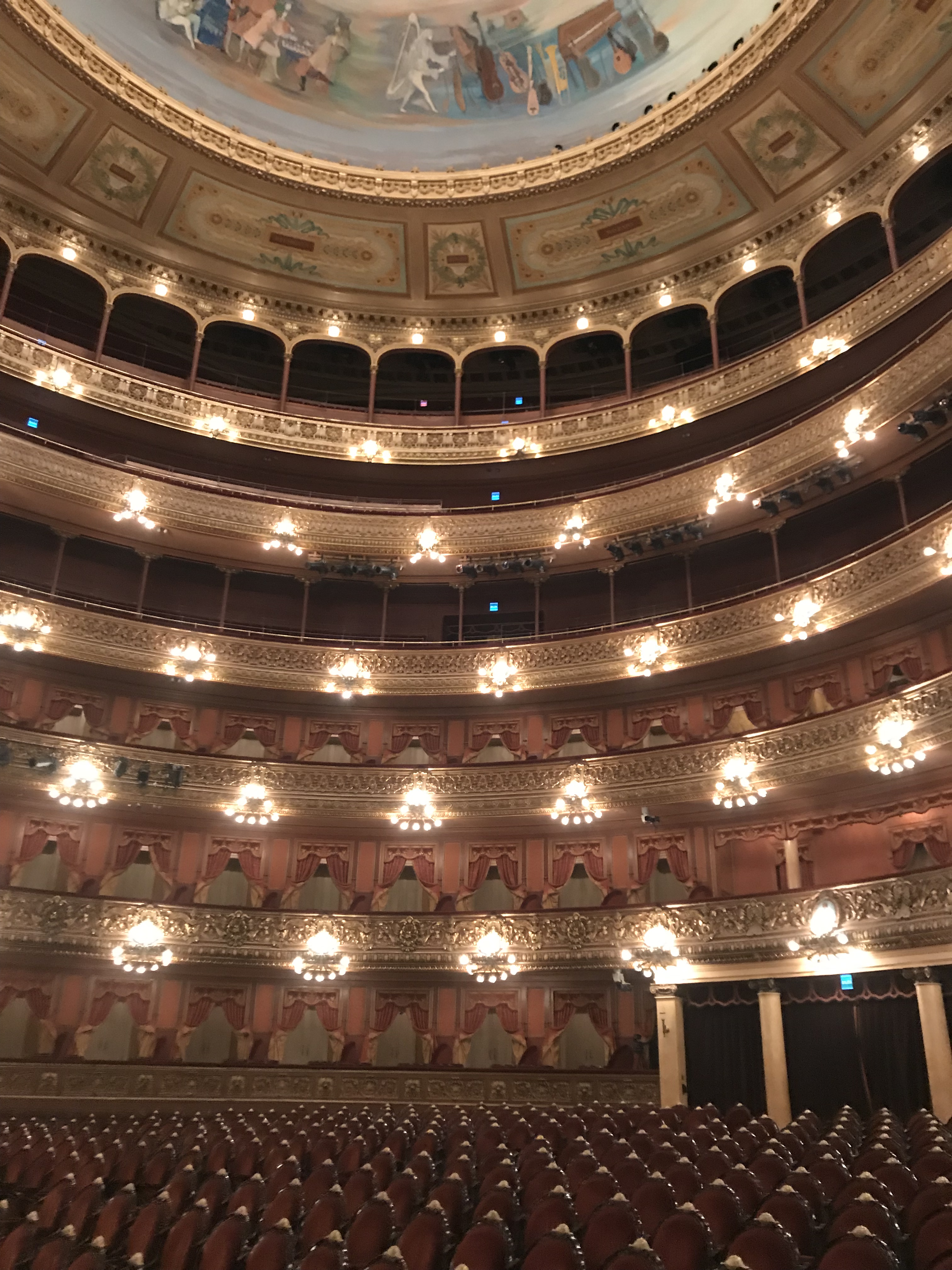
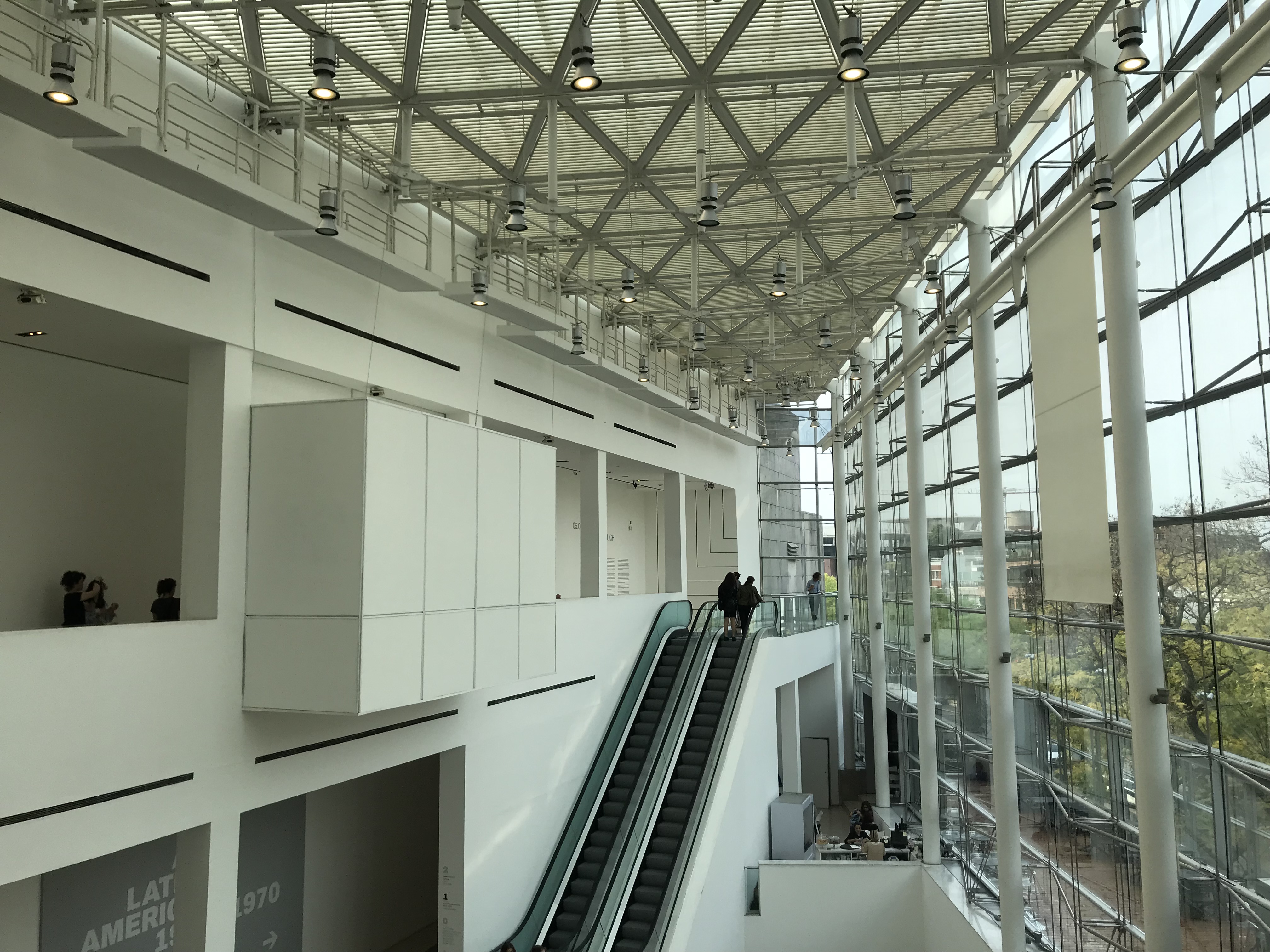
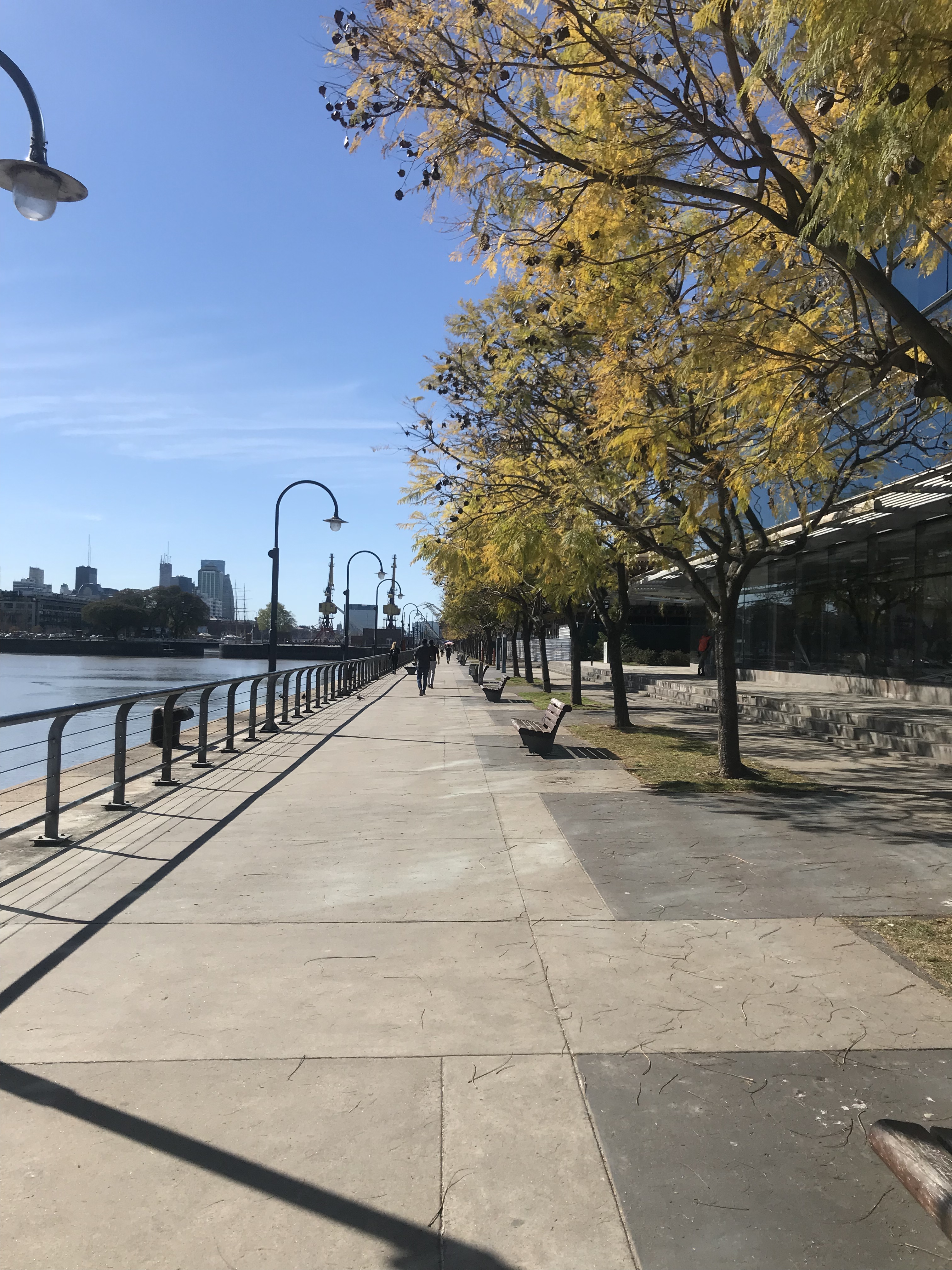
This city may be called the “Paris of South America,” but it reminded me just as much of NYC. Because, like the Big Apple, Buenos Aires has that same big city energy (which, for the purposes of this blog, I’ll call BCE 😉). I started to feel it one night at a bar in the trendy, graffitied neighborhood of Palermo. Skimming through a menu of high-end cocktails amidst old-time, apothecary-themed decor, I could easily have been in the East Village. The energy only grew stronger when I visited world-class institutions like el Museo de Arte Lationamericano de Buenos Aires (MALBA) and Teatro Colón—establishments that are right up there with the Whitney and the Met Opera House. And a few days later, the BCE became completely undeniable as I strolled through the Battery Park-esque Puerto Madero. Walking by the inviting cervecerias and waterfront restaurants, and watching the many runners, rollerbladers, couples, and kids enjoying the day, I had an overwhelming feeling that I was back at home, meandering down the West Side Highway. A few minutes later, a saxophone-playing street performer confirmed it—bursting into a soulful rendition of “New York, New York” at the exact moment I passed by. I could have cried from happiness. 

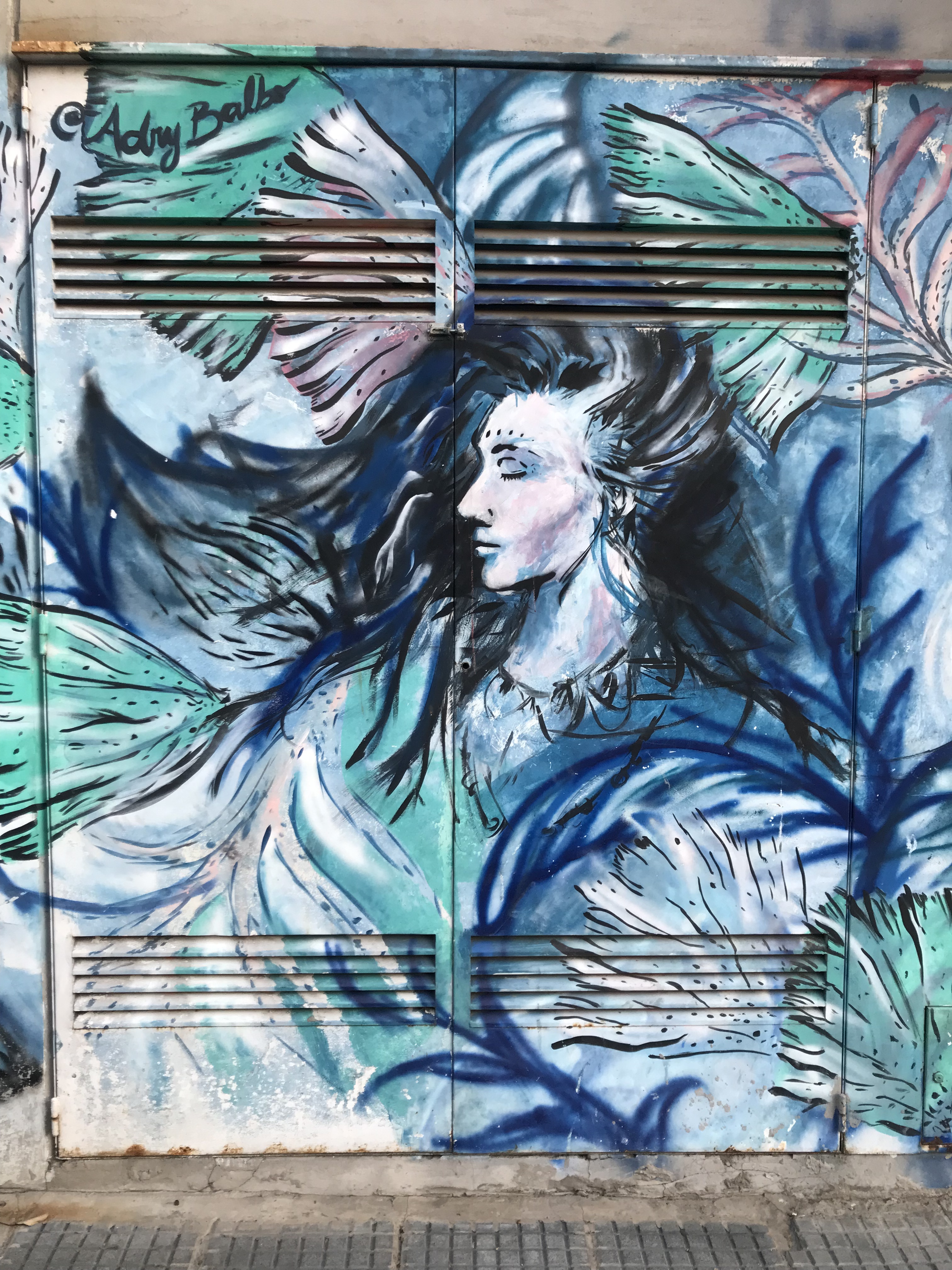
Art all around in Palermo.
Teatro Colón and MALBA–not too shabby.
The Hudson–I mean, Puerto Madero.

So, where does it come from?

The BCE that exists across both BA and NYC can be attributed to a few key factors. First, like New York, the city of good winds is incredibly cosmopolitan, attracting people from different cultures and countries. At its height of immigration in the 19th century (which was encouraged by a wealthy oligarchy), 52 percent of the city’s population were immigrants. A majority came from Italy, but there were also other Europeans—like the Spanish, Irish, and Germans—who made the voyage. And today, Buenos Aires continues to attract people from all parts of the world, including many South American countries, too. The result? Buenos Aires is essentially a melting pot … a place where this super white, dirty-blonde traveller finally flew under the radar (one woman even asked me for directions, as if I were a local!). After sticking out as a very obvious gringa in nearly every other country I’ve been to, blending in was a beautiful thing.

Now, let’s talk transportation—a key ingredient in any serious city. Out of all the stops I’ve frequented in South America, Buenos Aires has the best transit infrastructure by far. First things first, there’s a metro (which some major capitals, like Bogota and Quito, lack … crazy!). And while the system isn’t as extensive as the NYC subway, the trains are prompt and clean … which, for this New Yorker, felt like a real upgrade. But what if the subway doesn’t go to a certain neighborhood? Fear not. The bus has you covered. Unlike in La Serena, Chile, where I waited at unmarked bus stops and flagged down drivers from the side of the road; or in La Paz, where 1980s vans-turned-collectivos run chaotically with written destinations instead of numbers/routes; or in Santa Marta, Colombia, where pasajeros squished like sardines hang out of the open doors of moving vehicles, while a ticket man squeezes through to take your cash—the buses in Buenos Aires feel organized, safe, and manageable. Plus, there’s the ferry that takes you to nearby Uruguay, and a domestic airport that’s less than 20 minutes from downtown (along with an international hub farther out, as well). Whether by land, by air, or by sea—Buenos Aires’ transportation is truly top-notch.

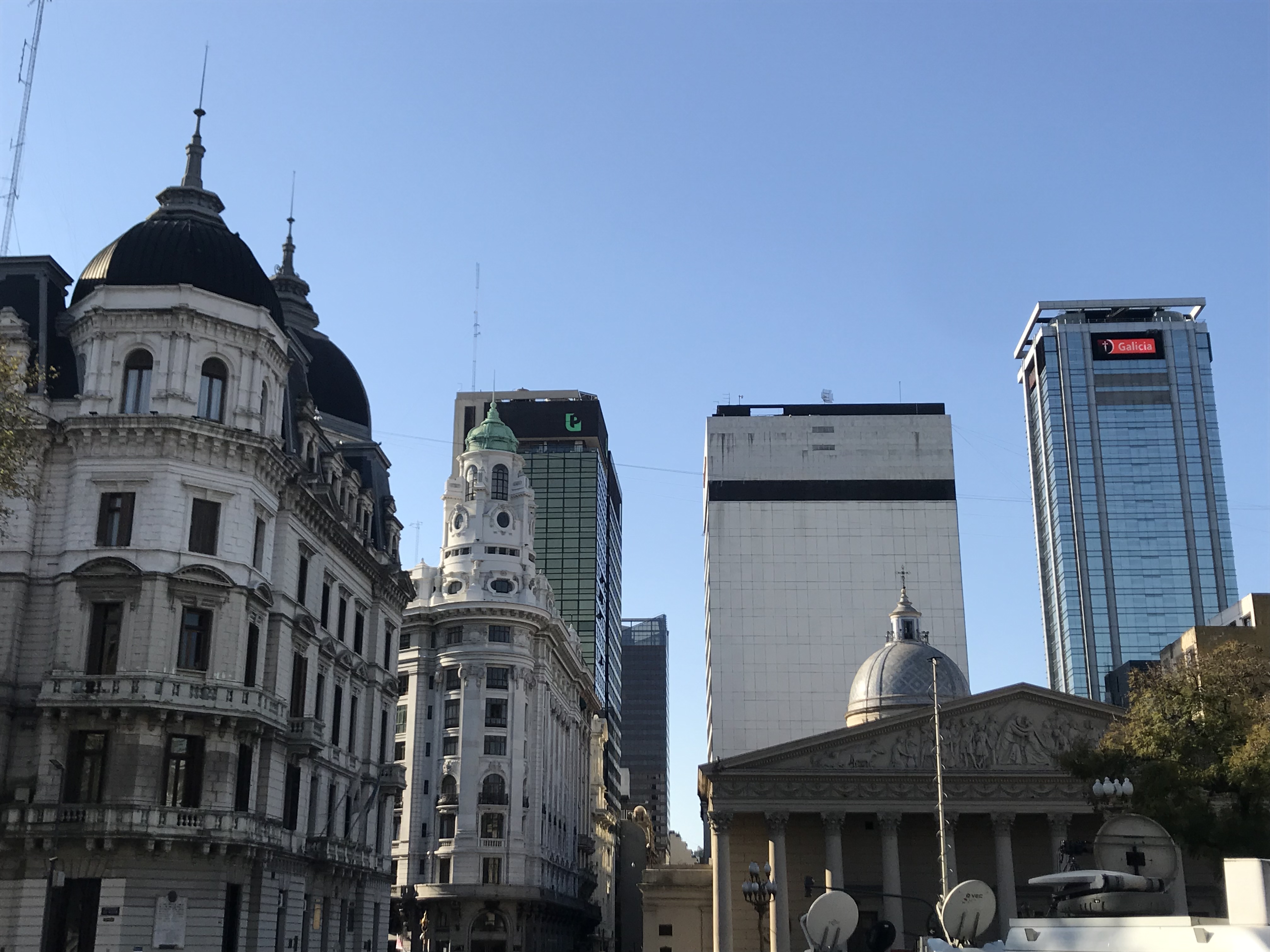
And then there’s the architecture. Buildings that rival some of the prettiest in Europe. Detailed facades that will make your neck hurt from always looking up. Structures that stun and surprise at every street corner. There’s Greek Parthenon-like churches. Ornately decorated office buildings commissioned by Italian businessmen. Apartments with Art Deco designs. Oh, and you can see French style everywhere. Like the population of the city itself, Buenos Aires’ architecture is a patchwork of influences and eras. On any given calle, there could be a depressing eyesore from the 1970s situated right next to a beautiful, grandiose hotel from the 20s. My tour guide called it “eclectic.” I call it BCE.

Domed roofs and rectangular skyscrapers, classic and modern–all coexisting peacefully in a few city blocks.

Just like home

Of course, it wasn’t just these three factors that made me nostalgic for big city living. There were also little moments that I didn’t even realize I had missed. Here, I had my first bagel in more than four months (and stocked up on sushi, too). Here, I visited real grocery stores, instead of buying produce at vibrant (albeit questionably clean) markets. Here, I could exercise without feeling like I was the only jogger on the sidewalk (… even though I never did).

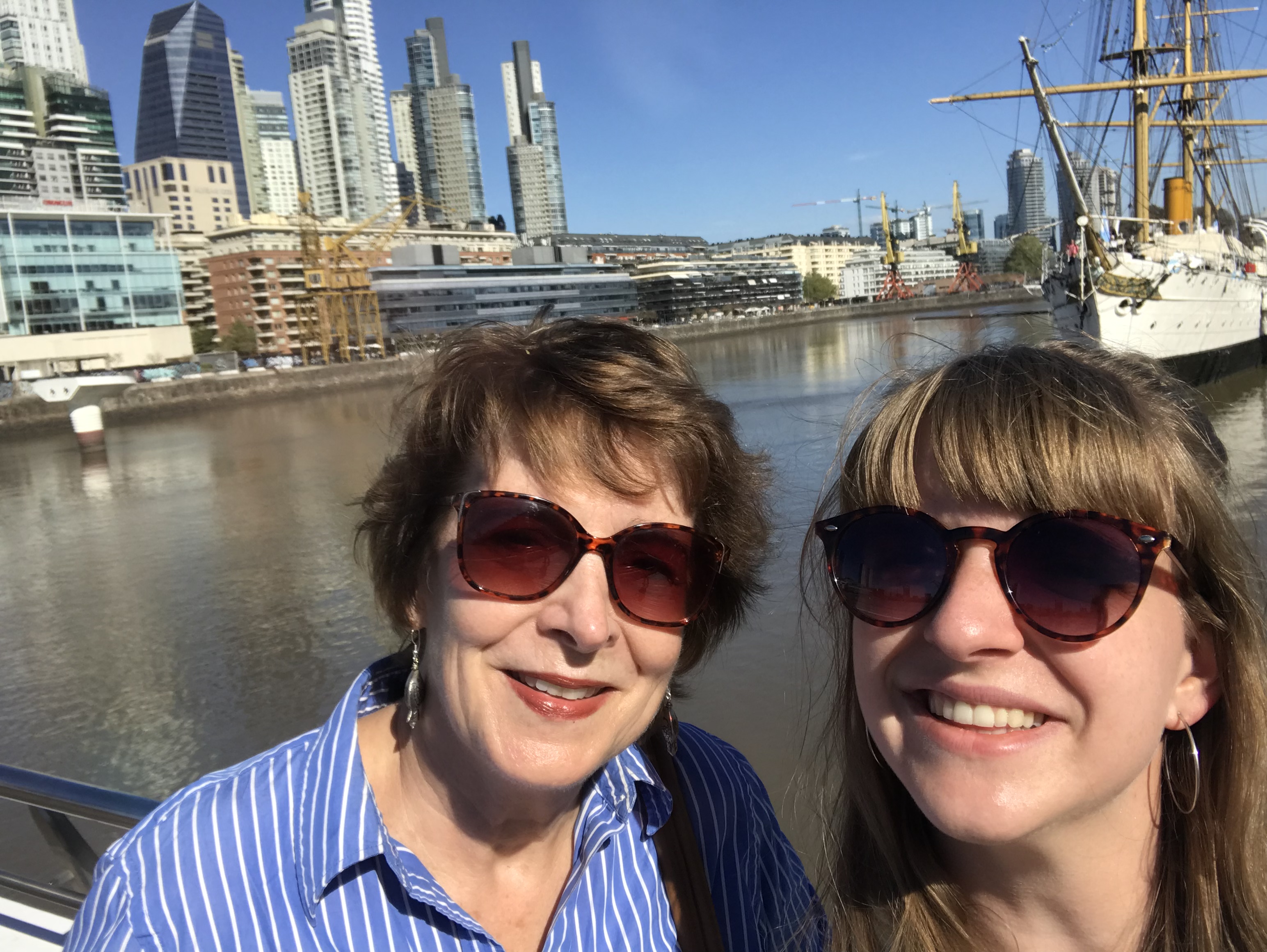
But the one thing that made Buenos Aires truly feel like home? My mom. Having her here with me for a week (and another in Chile and Mendoza) was like a much needed dose of medicine. Her visit made time irrelevant, turning the past three months into three minutes. It was like I was back in Summit (or Morristown, now)—but with better dining options and less English. Everything was just as it’s always been. We laughed. We fought. We explored. We relaxed. Through it all, my mom was an A+ travel companion, always up for anything—whether it was an eight-hour bus ride through the Andes, a day trip to a new country (Uruguay), or a (boozy? just kidding) bike ride down a busy road to visit various vineyards. And at the end of the day, it’s not really about the places—it’s about the people. My mom made Buenos Aires feel less like another pin in the map and more like a place that I could grow roots … at least for a week or two. 

Love this lady!

Hard to leave

Actually, I spent almost three full weeks in Buenos Aires. It felt immediately comfortable—and that made leaving infinitely more difficult. But still, part of me missed the rush of the unfamiliar, the new, the unknown. After all, that’s what makes travel exciting … and sometimes addicting. So where to next? In a few days, I’ll swap South America for Southeast Asia. Headed to Thailand via London on November 3rd. If you need to reach me, I’ll be on the beach.

Con cariño,

Caroline

South American Update #7: Empanada To Go

During the planning of this trip, I experienced a ton of anxiety and was constantly unsettled. After all, why leave the stability, safety, and security of my life in New York for the unknown? My peak stress level hit in early April. I had a million things to do—pack, move, buy flight tickets, get vaccinations, etc., etc.—and The New York Times decided to publish an article about the recent rise in solo female travel. The title? “Adventurous. Alone. Attacked.” 😑

Once I read the article, (I live and breathe by The NYTimes, but don’t think I’ll ever forgive them for that one), I definitely was a little nervous about the potential danger I might encounter on the road. But the thing that made me even more scared was the second word of that headline: being alone—and not just for safety reasons. I’m an extrovert, happiest when I’m with friends and family. When I’m by myself, I don’t recharge … I feel drained, sad, melancholy. How was I supposed to survive for months on my own? 

Surprisingly, this worry of mine hasn’t really materialized. That’s partially because I peer pressured some amazing friends into traveling with me for the first month and a half to help me get my sea legs (thanks, ya’ll!!).

These are my friends

Ahoy, mateys!
Terrified but together
I’ve since forgiven them for making me do this

But it’s also because traveling makes everyone super welcoming. Friendlier. More open. It’s a process that draws even the most reticent individuals out of their shells—and forces everyone else to endure awkward encounters that they would otherwise avoid in their actual lives. In the city, I would never visit a bar by myself. But in hostels, I go alone all the time, chit-chatting with bartenders and playing drinking Jenga with fresh faces. In the real world, it’d be rare for me to to hang out or travel with someone I just met. But down here, those rules don’t apply. I’ve spent the day getting meals with total strangers I’ll never see again, and I’ve traveled with newfound acquaintances who quickly become fast friends. The whole experience reminds me of returning to childhood—that fun, carefree time completely unencumbered by formality or social constructs. A few years ago, my cousin brought her then-five-year-old daughter, Claire, to New Jersey for a couple days. To keep her entertained, we took her to the park. Within minutes, she had found a buddy. Together, they swung, tagged, and monkey-barred for over an hour. And when we left, Claire pleaded: “Can we come back tomorrow, so I can play with my friend again?!” Traveling makes making amigos as easy as it was when you were kindergarten.

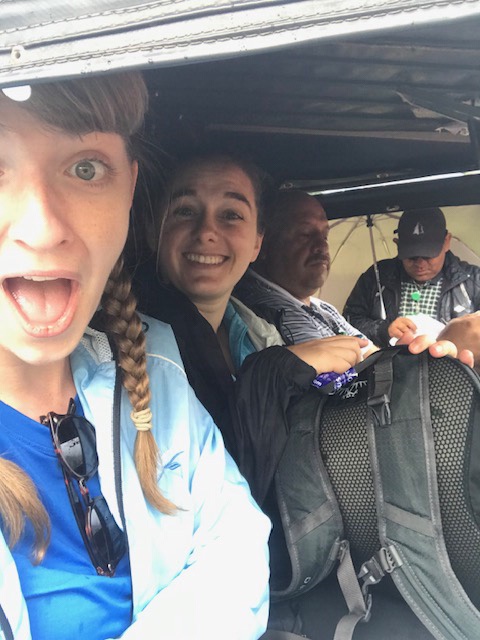
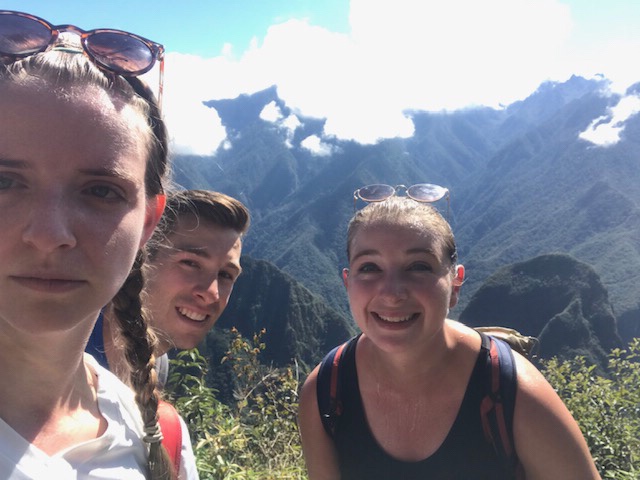
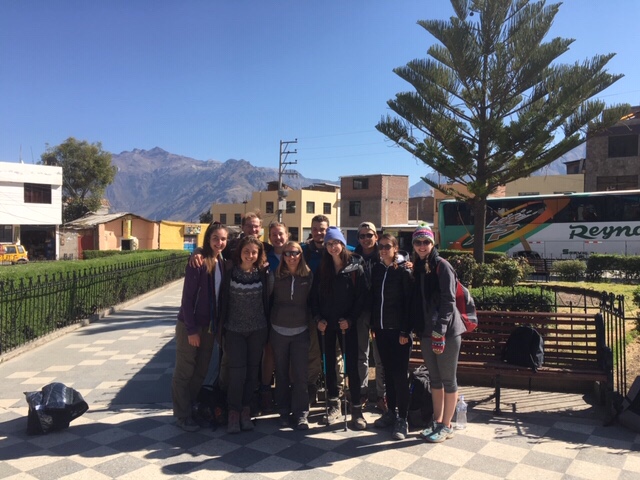
These are some new friends:

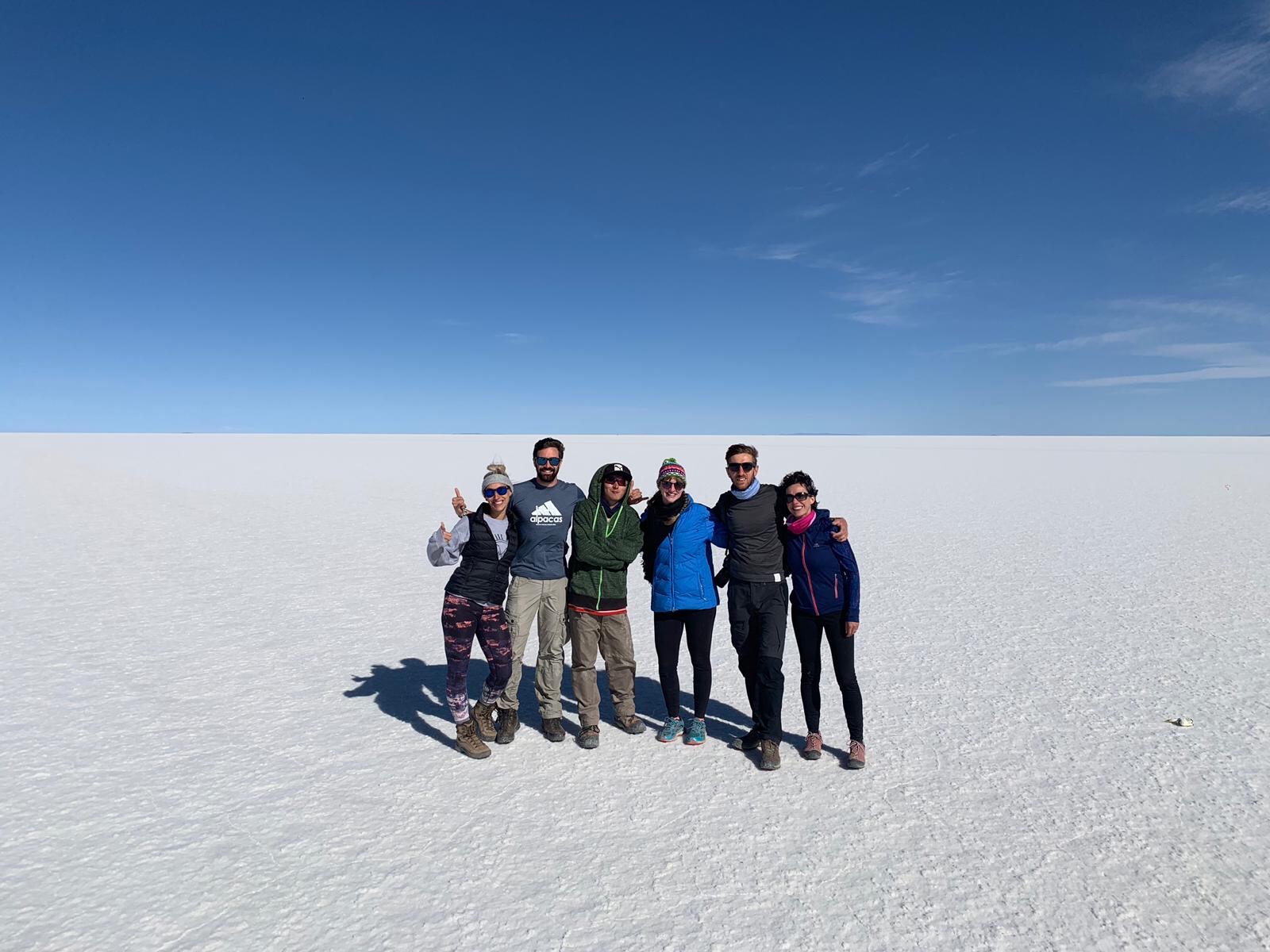
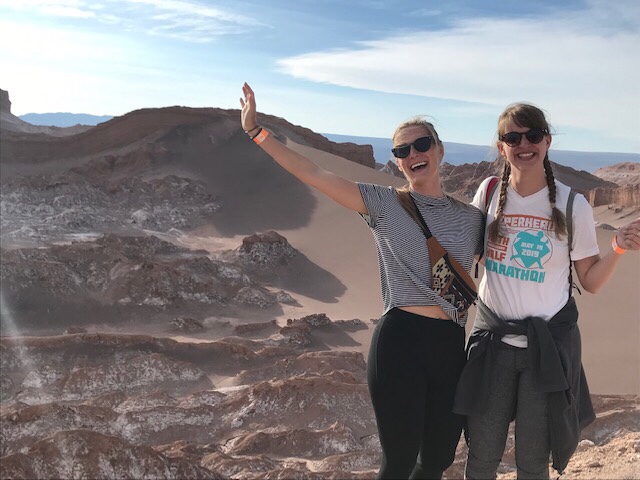
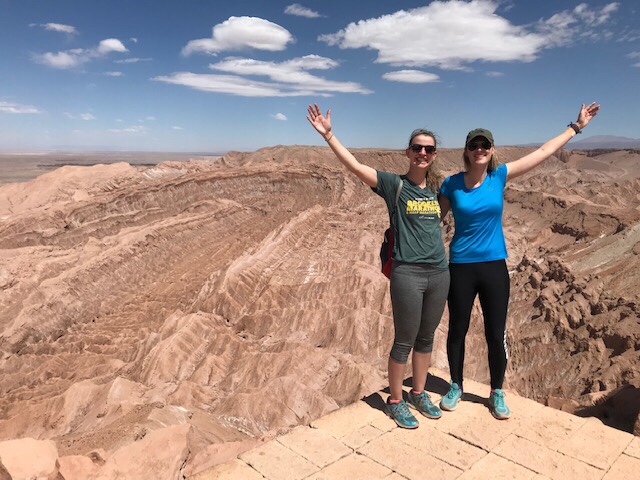
Tour teammates in Colca Canyon and the Bolivian salt flats
Amazing people to pose with on mountains in Chile!

There are, of course, times that are less social than others. In Cusco, I uncomfortably dined alone for the first time in my life at a crowded French creperie. In La Serena, I was the only guest in my eight-person dorm room, and in Sucre, I was the only visitor in my whole hostel … both times left me stir crazy days. And during my tour through the breathtaking salt flats of southern Bolivia, I was placed in a group with two couples who were so lovely—but, on occasion, I couldn’t help feeling like a true fifth wheel. 

In other moments, being alone has just been plain inconvenient. In airports or bus terminals, there’s no one to watch my bags when I have to use the bathroom. At major attractions, there’s no token picture-taker, so sometimes selfies have to suffice. And in South America, there aren’t a ton of takeout options—so if I don’t want to eat in a restaurant por mi mismo (which I often don’t), I’ll order yet another empanada to go … and while I do love them, I have to admit that my go-to solo meal is getting kind of old. 


An accurate representation of my trip … but even I have a limit

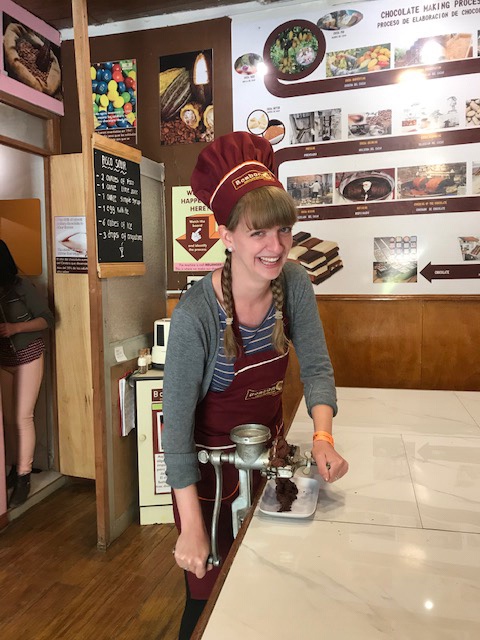
Many of these experiences have inevitably been lonely. But they’ve also enabled me to feel incredibly independent … and taught me to actually appreciate my solitude—something I didn’t fully understand how to do before. Since the beginning of my trip, I’ve taken chocolate-making classes where I’ve been the only student. I’ve purchased Pisco tasting tickets for one. And oftentimes, these activities are rewarding for me. In these moments, it can be refreshing to truly travel solo—and I’m proud of myself for learning how to be on my own. 


Basically had a private, one-on-one chocolate-making lesson … not a bad deal

But, at the end of the day, I’m still a people person. That’s not changing any time soon. Lucky for me, every new city, hostel, and tour offers endless opportunities to keep the conversations rolling and the relationships growing. Andddd I’ve still got a few months left to go—so if any of you fine folks want to come down and keep me company along the way, I’d be the happiest. (I’ll keep you posted on where I’m headed next!)

Salud, chicos!

Caroline

South American Update #6: The Best and Worst, Two-Month Round-Up

It’s been a little over two months since I first left home. Crazy, because in my mind it feels like two years (well, not actually that long, but time works in weird ways). In that time, I’ve traveled with five friends, visited four countries, and sent you all a few updates—mostly featuring specific stories or general themes that have occurred along the way. But these probably haven’t provided the best snapshot of South America. So, now that I’m fully acclimatized to my surroundings at 8+ weeks in, here’s a round-up of all the pros and cons that this amazing continent has to offer:

1: Transportation

Best: Bus travel

Not going to lie, I was pretty scared about getting on South American buses based on some stories I read on the Internet. And true, some local buses have been pretty hectic. In Salento, I sat next to a man carrying a chicken. In Santa Marta, I was squished like a sardine in the most overpacked aisle, all while basically hanging out of an open door. But for long-haul trips, buses here have been downright wonderful. Think: TVs for each passenger, USB charging ports, fully reclinable seats, snacks and coffee included for some rides—all for $25 or less. Bolt Bus, take note.

Worst: Protest culture

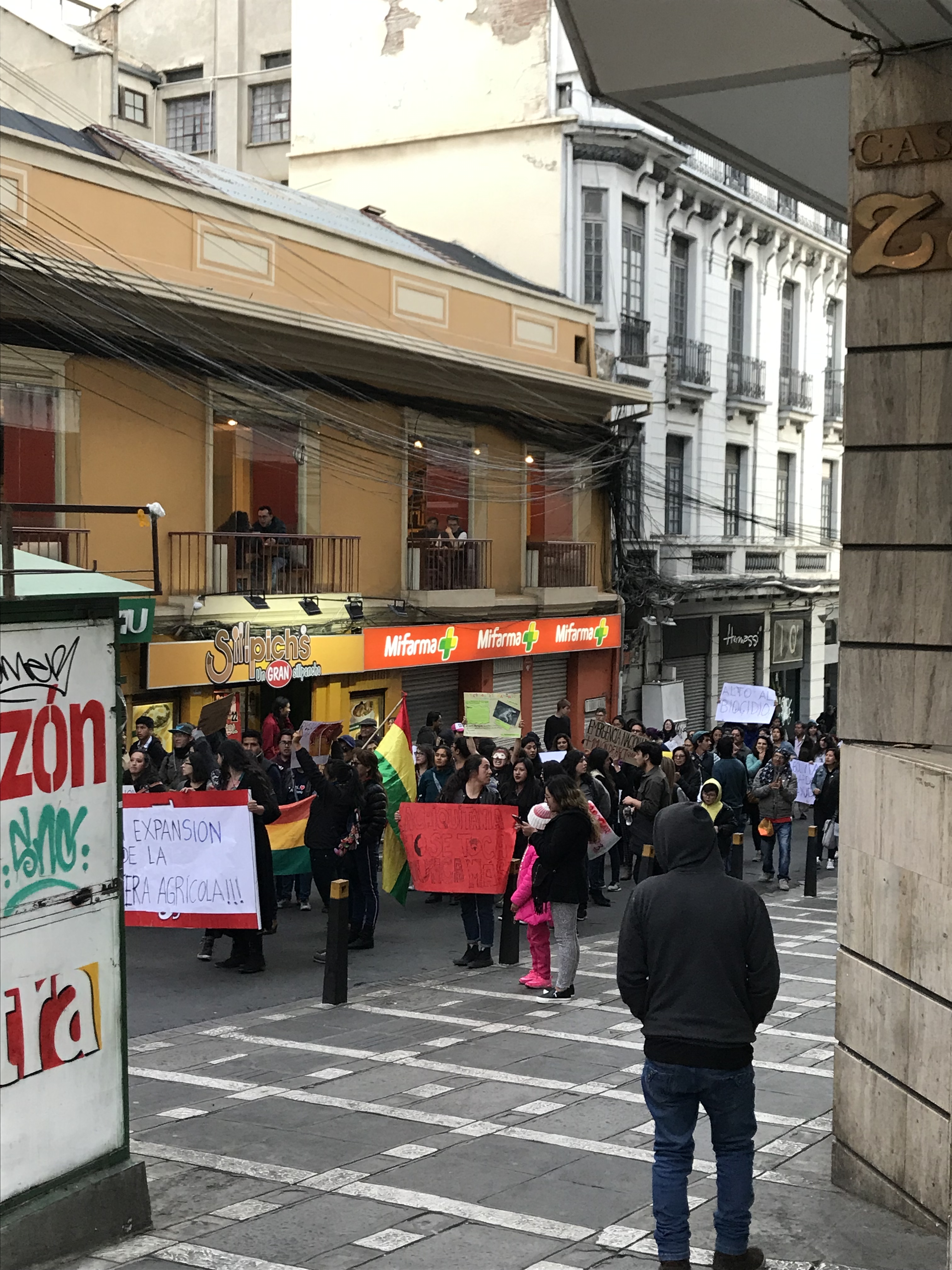
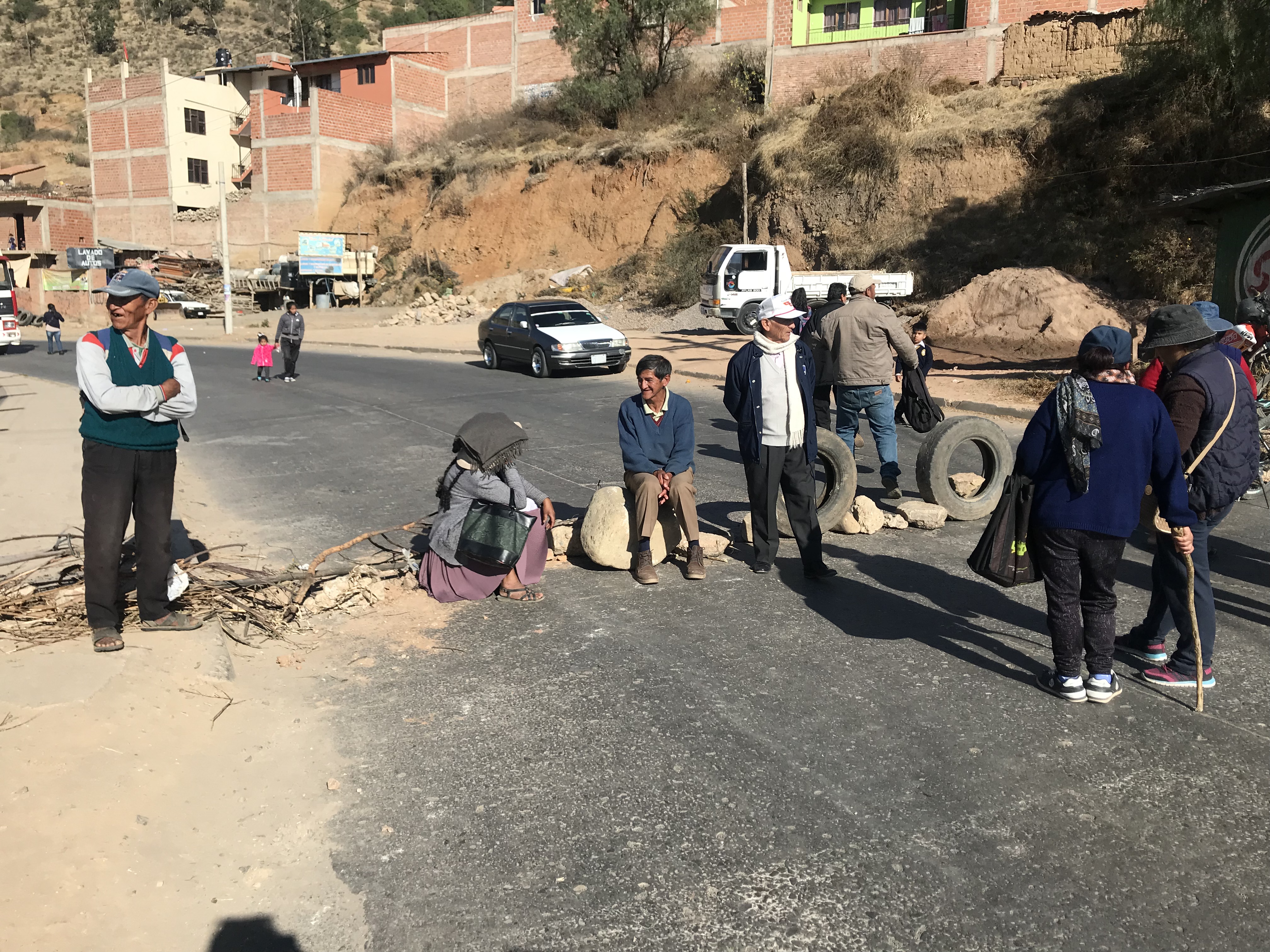
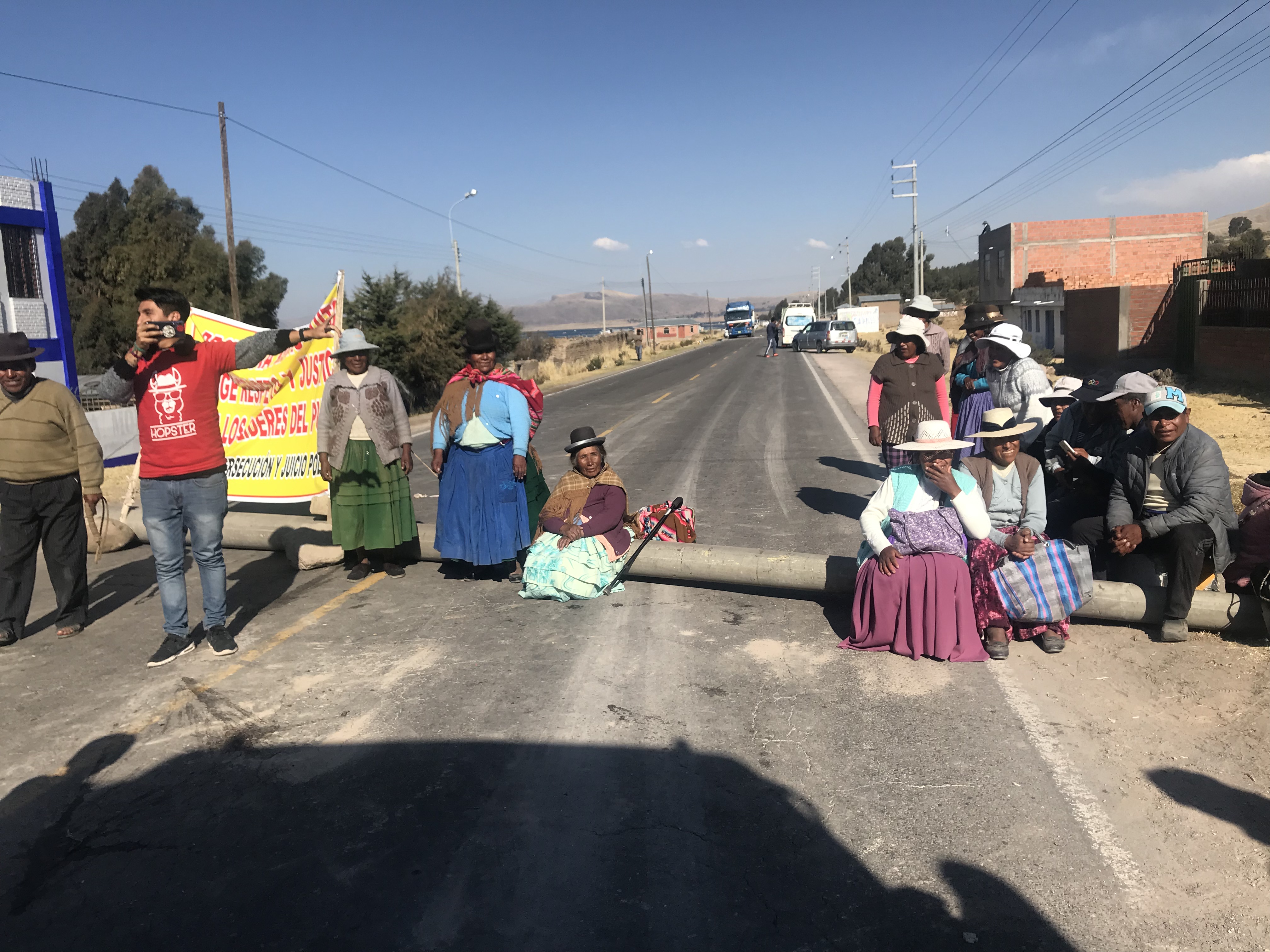
Every country has its issues (whaddup, USA!), and South America is no exception. Protests against mining projects, corruption, and other problems are commonplace. Unfortunately, instead of taking place outside of town halls, this unrest occurs in the streets—aka the lone roads that connect one major city to another. Almost every time I’ve been on a bus, there’s been a protest that has required me to either wait hours or get out on the side of a highway with all my stuff and walk the last 25 minutes to my destination (one time this happened in the cold and dark at 6 AM). Whether it’s with rocks, pipes, or people, the citizens of South American countries love to get their point across by forming traffic blockades. And while I truly respect the concept of making your voice heard, the reality is it’s been a real pain in the ass.

Some scenes from various protests across Peru and Bolivia.

2: Food

Best: Street eats and markets

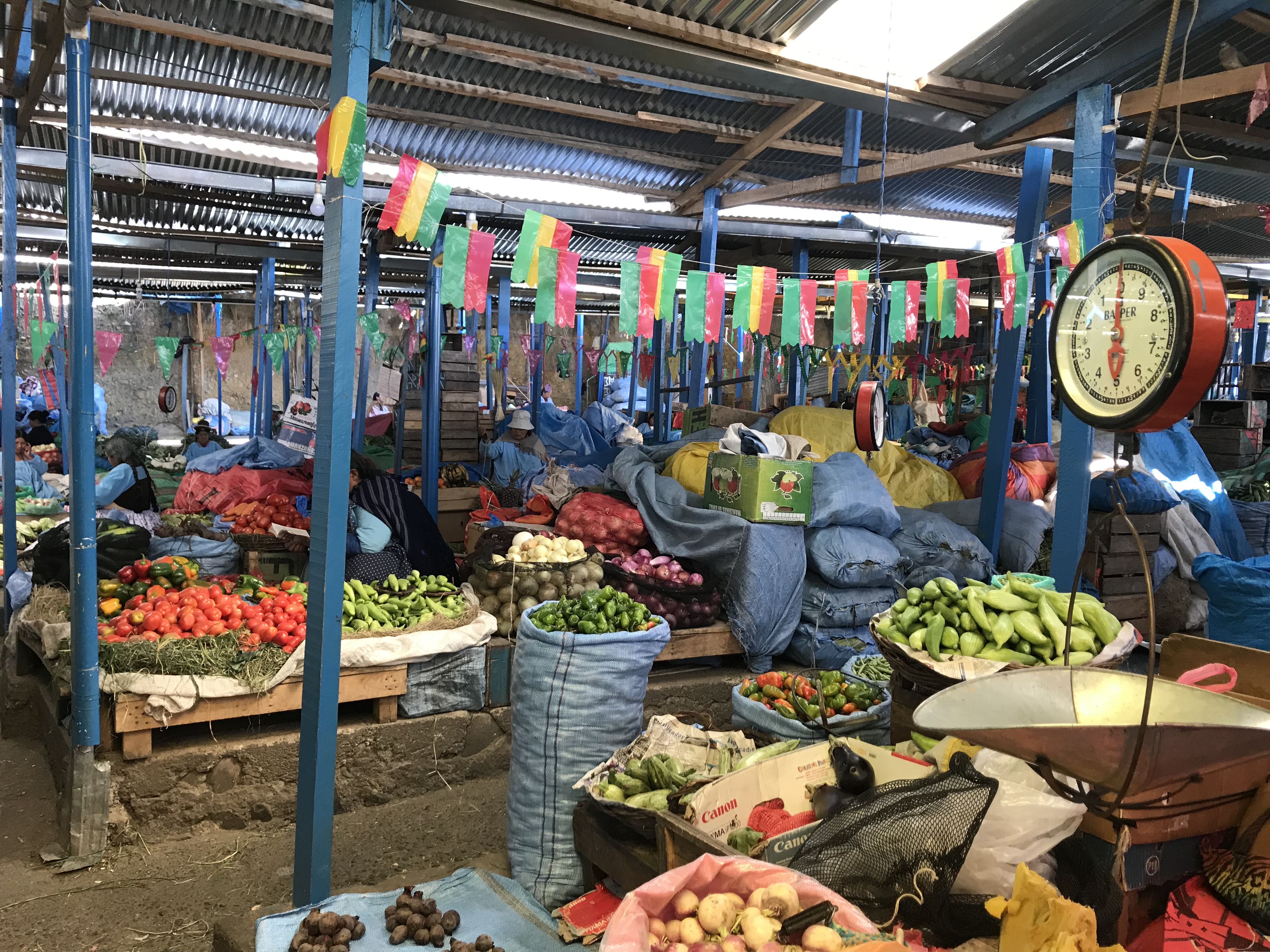
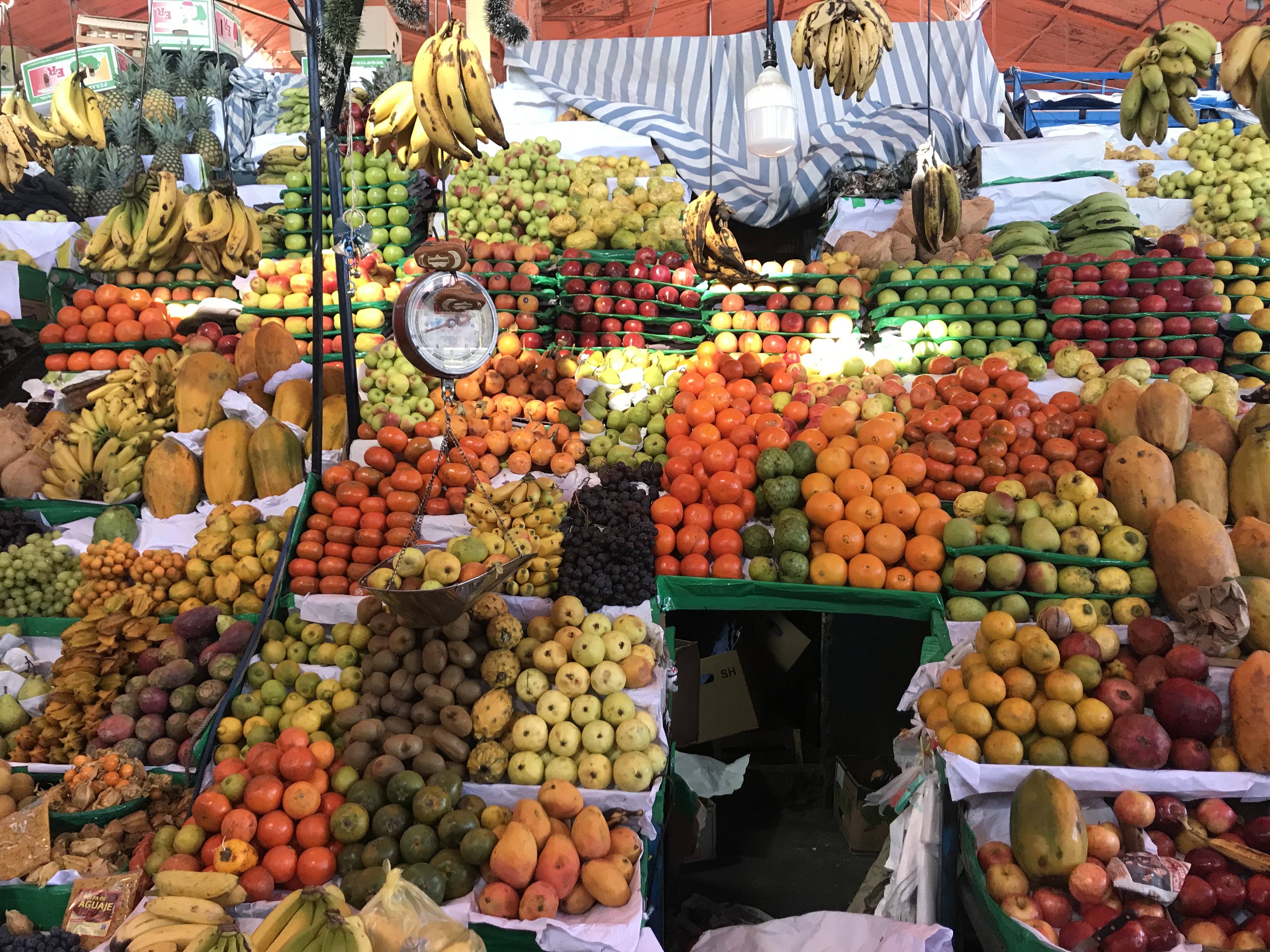
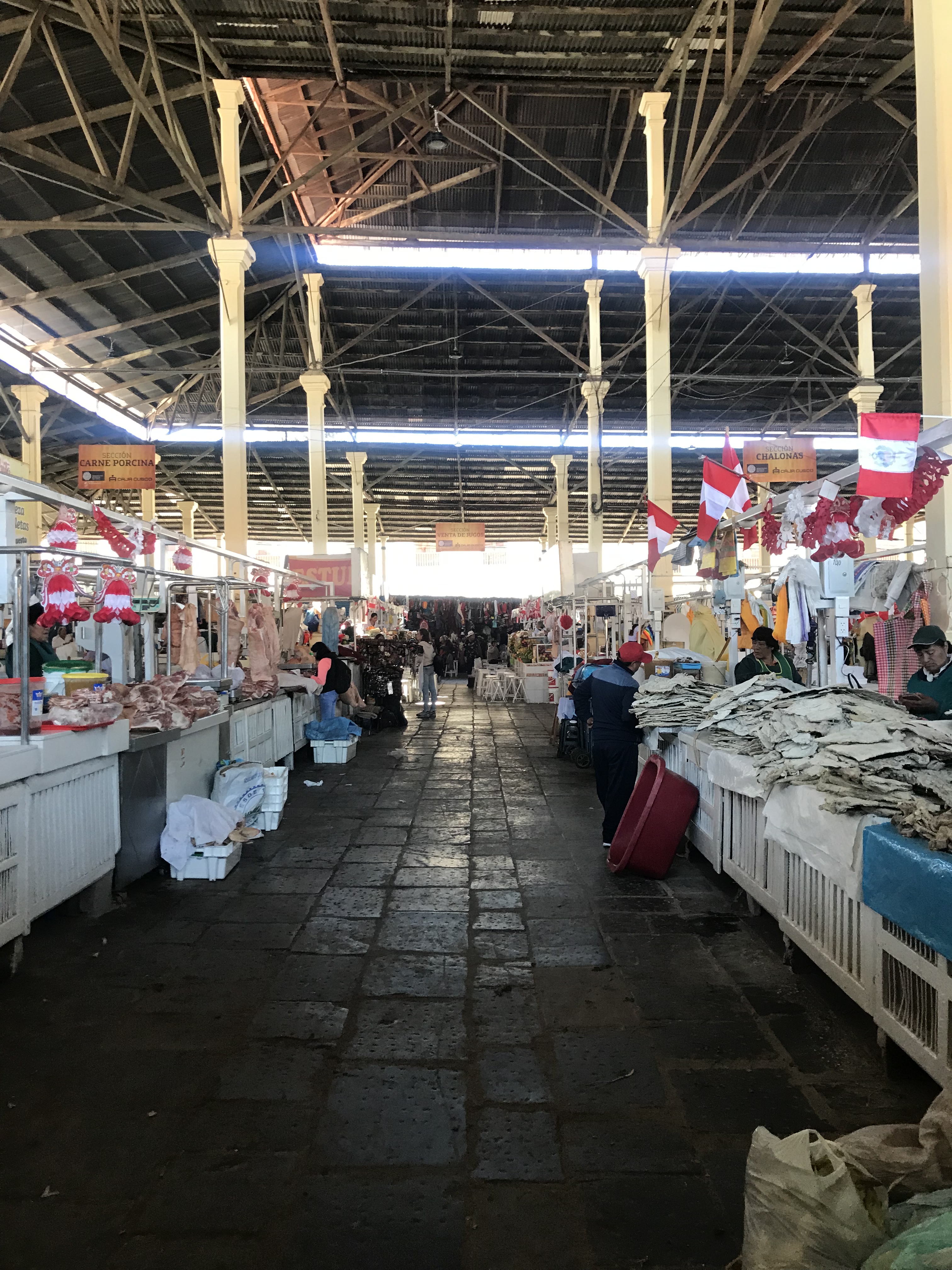
One of the best meals of my entire trip was an empanada I bought from a random guy on a beach in Colombia. In Ecuador and Peru, my friend Nick and I jumped from market to market, indulging in some of the freshest juices made to order (and a particularly mouthwatering lunch of ceviche and trout, too). In Bolivia, I’ve been subsisting almost entirely on salteñas, a sort of cousin of the empanada, which has a liquid-y broth/sauce inside and which I mostly purchase from street vendors. So, forget restaurants. Many of the best bites can be found stand-side on the next corner.

Markets on markets on markets.

Worst: Lack of vegetables

I love my pizza, pasta, and bagels. But believe it or not, Carbo Caroline has a limit. After weeks of exclusively eating rice, potatoes, and meat, my body is seriously deprived of nutrients. Where have all the vegetables gone?!?! I’ve seen them sold in markets. But they’re almost never included on menus. Minus avocados and corn, the vegetable is almost non-existent in the Southern Hemisphere. SEND ME A SALAD ASAP.

3: Economy

Best: Prices

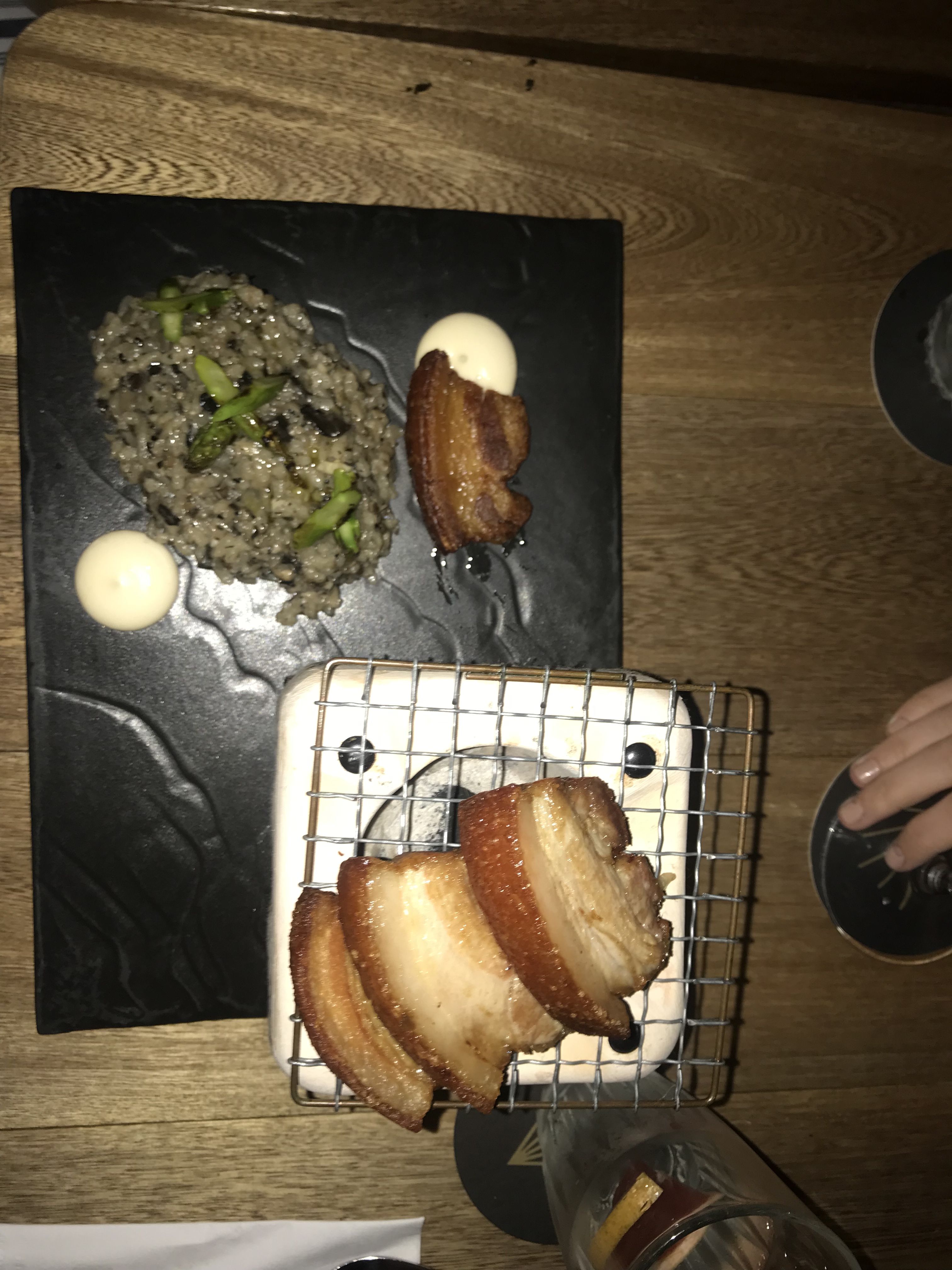
After my friend Maxine left Cusco, she sent me a text that pretty much summed it up: “I just paid $18 for a beer in the Miami airport! Take me back to Peru … “. In Colombia, $18 bought me a delicious, world-class meal of pork belly served over live coals in a beautiful, verdant restaurant. In Bolivia, $18 is the equivalent of three nights in 8.0- or higher-rated hostels. In New York, I can spend over $100 in a night and can barely buy lunch for less than $15. In South America, my dollar feels like gold. (Which is a good thing, because my budget is lasting longer than I thought!).

This picture does not do this meal justice (sorry, I’m not a food photographer), but just know that I still dream about it …and it barely made a dent in my wallet.

Worst: Cash

My friend El and I discovered that South America was still very much a cash-based society in Santa Marta, Colombia. We somehow happened to visit a mall on what was essentially Colombia’s Black Friday. There, we waited more than 20 minutes in line for an ATM, only to have it run out of cash. The lesson? Down here, cash is king. I’m constantly worried about getting more and not having small enough bills (I was once denied an empanada that cost five soles in Cusco because I tried to pay with a 20). Yes, it sucks that I can’t earn points. But what sucks more? The feeling of security that comes with having a card in the US doesn’t exist here.

4: Infrastructure

Best: Malls

In the US, the mall is dying. Amazon is sucking the lifeblood from them. But in South America, malls are very much alive and well. Strange as it sounds, I’ve spent a lot of time in malls down here … partially because I’ve had to get my phone fixed so many times (I’mmmmm janky!); partially because when I was traveling with Nick, we went to tons of sports stores to track down soccer jerseys; partially because I’ve desperately been on the hunt for a new pair of sneakers that don’t have a hole in them (more jank). But also because the malls down here are SO nice. They feel new, clean, and house the brands I miss (hello, H&M). They offer a nice respite from the often overwhelming mercados. And their fixed prices mean that I get a descanso from haggling with street vendors (which can be exhausting). As someone who grew up shopping and working in malls, visiting them in South America is nostalgic, like visiting a little slice of home.

Found a Payless at MallPlaza in Arequipa! They still exist! And I’m still janky 🙂

Worst: Bathrooms

So, I’ve actually seen worse bathrooms (hey, Morocco), but I needed something for this category … and while the washroom experience down here has been totally tolerable, there still is much left to be desired. I miss always having consistently hot water and high pressure. I miss being able to flush toilet paper (what a luxury!). I miss always having base and curtain that separates the shower from the rest of the bathroom (in some hostels I’ve stayed in, the water just goes everywhere … why?!). I can’t believe I’m actually saying this, but I miss my grungy New York apartment bathroom—with the rust on the ceiling and wonky faucet and all. But these complaints aside, bathroom comfort is a tiny price to pay for the ability to travel to some of the coolest places I’ve ever seen.

I’ve spent most of the real estate of this letter/blog talking about both sides of the spectrum. But the truth is, the positive has mostly outweighed the negative. There are so many awesome aspects of the countries I’ve visited, which I didn’t even mention because I don’t think I can sum them up in a single paragraph: the music, the nature, and, most importantly, the people. So if you guys can give up spinach and broccoli for a few weeks, and don’t mind dealing dealing with sub-par restrooms for a little while, I promise you this: South America is absolutely incredible. Get yourselves down here, stat.

Mwah!

Caroline

South American Update #5: Do You Have Instagram?

Before I went on this trip, I decided I needed a detox from social media. I deleted Snapchat permanently (goodbye, fun dog-tongue filter). I did keep Facebook, simply because so many social events are planned through it—but tried to limit my usage to the weekends. And I deactivated Instagram, the most fun and popular of the apps, for a full seven months.

Being off of Instagram was a nice break. I could, of course, still pop onto the public profiles of some of my favorite accounts (@newyorkercartoons continued to bring levity to my stressful days and checking the @betches feed helped me feel relevant. And, of course, my friends also kept me in the loop … I’m looking at you, Olivia). But generally, no Instagram meant I could avoid seeing how “wonderful” people’s lives were: I was no longer inundated with posts featuring tropical vacations, heartwarming proposals, and cute selfies. I don’t mean to sound like too much of a downer … I usually try to be happy for other people’s happiness. But sometimes when you only see these “perfect” impressions of others, it can make you feel inadequate. Insufficient. Incapable. On the flip side, with my handle on hold, I had to stop curating imagery from my own life to show off to others. The milestones, success stories, and accomplishments that I might have otherwise advertised went unannounced … and the validation that I often crave disappeared with it. When my parents moved out of my childhood home. When I said goodbye to my first New York City apartment after four years. When I ran my sixth half marathon. I couldn’t share these events with the world. And you know what? It was strangely okay to just let these experiences happen—without the dopamine rush that came with the likes and comments. 

Moments that flew under the radar from my Instagram hiatus last spring

My point? I have a weird relationship with social media. I hate it, but I love it. I’m quick to criticize it, but still concede that it provides a lot of benefits. I’m half in, half out. And this relationship became even weirder as I started to travel. 

An indispensable tool

Passport. Phone. Wallet. Instagram. There’s not a lot that you need as a traveler, especially when you’re living out of a backpack, but these some of the necessities that you really can’t do without. I’m not joking. On the road, no matter where you may be, Instagram becomes pretty indispensable. First, it’s a way to show the world that you’re not only still alive—but also living pretty damn well (unlike the seven months that preceded my trip, my life has become infinitely more interesting now … so I can’t help but want to share). Second, it’s your lifeline to everything and everyone back home. If you can’t be a part of the action, you can at least pretend like you are. Like a picture of your friend’s birthday brunch. Double tap the shot of your old coworkers hanging out. Respond to your cousin’s story with a slew of emojis. You’re not *actually* there, but you’re still there in spirit. 

But perhaps the most important aspect of Instagram is its role as social currency. Meet some cool people in the hostel? “Do you have Instagram?” Want to grab a beer with someone from your tour? Message them on Instagram. Just had a great conversation with a stranger you’ll never see again in your life? Follow them on Instagram. In New York, Instagram felt like it distracted me from my own life … maybe I’d spend a night in scrolling through my feed and wishing I was out, or maybe I’d log on at dinner instead of socializing with my friends. But in South America, Instagram enhances my life. It’s helped me reach out to people to I just met and enabled me to stay connected to new contacts. And yes, sometimes it’s pretty futile. Why should I follow Felipe, the guy who I hung out with for just five hours during a Sacred Valley tour? Why do I need to see the social media of Sarah, a girl who I got dinner with from my hostel one night? It’s true—there will likely come a time where I may not even remember who these people are. But, for now, I appreciate the continuity. It’s nice to see what your fellow travelers are up to, even if your paths won’t cross again.

A detrimental distraction

This musing isn’t supposed to be a love letter to Instagram. There are serious drawbacks that come with it, too. For example, Machu Pichuu was spectacular … but it’s splendor became harder to appreciate with thousands of tourists snapping selfies and spending a full 10 minutes trying to get the perfect pic for the ‘gram. Here’s one of the seven wonders of the world, and the only way we can look at it is through our camera lens. Of course, Nick, Maxine, and I were guilty, too—like lemmings, we waited in line with everyone else to take our pictures, to double check them, to make sure their quality was top-notch. But there was something almost a little stressful about this process, and it detracted from the magnificence that we were experiencing in the moment. 

A flawed relationship

This constant push and pull between positive advantages and negative shortcomings of social media isn’t something that’s unique to traveling—but it’s certainly heightened by being on the road. For now, I’lll continue posting at my own pace … and hopefully you’ll still be able to enjoy my adventures, regardless of how delayed they appear. But just remember that Instagram isn’t the whole picture. It’s a highlight reel. If we’re being honest, there are plenty of mundane moments and bad days from my trip that you won’t see. But my promise? I’ll do my best to keep it real with you guys whenever I can.

Adventures from all angles

Missing you all! 

Caroline